Background:
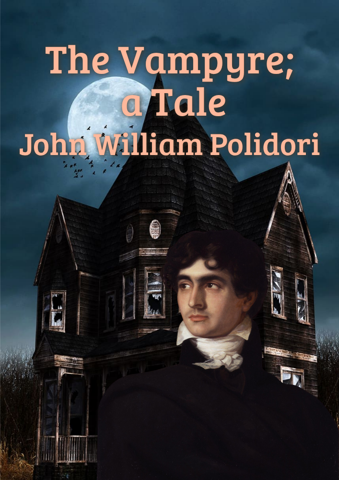
Published in 1819 after the famous 1816 gathering near Lake Geneva, Polidori's tale transformed fragments associated with Lord Byron into a new prose figure: the aristocratic vampire moving through fashionable society. Its first publication was wrongly attributed to Byron, making authorship part of the work's history.
What kind of book is it?
Aubrey becomes fascinated by the enigmatic Lord Ruthven and gradually confronts a pattern of seduction, secrecy, travel, and death. The tale transfers vampiric danger from folklore's graveyard body to a socially mobile nobleman protected by reputation.
Literary style:
Compressed third-person narration, travel episodes, fatal promises, withheld recognition, fashionable settings, and abrupt transitions create a story whose gaps intensify helplessness. Ruthven's opacity helped make him reproducible across later stage and prose versions.
Reading focus:
Lord Ruthven's power comes from social readability: he can enter drawing rooms, travel among elites, and let reputation shield conduct that a folkloric monster could not conceal. Aubrey sees warning signs but lacks a language and position strong enough to make others act on them. Travel widens the story's geography without freeing him from Ruthven's influence; fashionable society and remote danger become parts of the same pattern. The fatal promise intensifies this helplessness by turning personal honor into an instrument of predation. Readers should notice how often knowledge arrives without usable proof, and how the narrative's abrupt compression forces consequences to overtake explanation. The tale's publication history reinforces its interest in reputation and attribution: the mistaken association with Lord Byron initially shaped how the work was received, just as Ruthven's aristocratic image shapes responses inside the fiction. Its importance to vampire literature lies in this union of supernatural threat and social privilege. Predation no longer waits outside civilization; it is protected by the manners, mobility, and credibility civilization grants to a certain kind of man.
No screen adaptation is singled out here. Searches of BFI, AFI, IMDb, and major reference catalogs did not yield a sufficiently well-supported production to recommend without qualification. For this philosophical work, lectures, stage readings, and documentary discussions are more common entry points than a direct narrative adaptation.
Edition focus:
Publication history is unusually important because the 1819 tale was initially attributed to Lord Byron and is sometimes printed beside related texts.
Reading recommendation:
Choose an edition that clearly credits John Polidori, preserves the complete unchaptered tale, and explains the Byron attribution rather than silently presenting later vampire material as part of the original.
Cultural significance:
The work is a crucial link between earlier vampire folklore and the urbane literary vampire later developed across theatre, opera, fiction, and film. Its importance lies less in modern psychological depth than in the durable social form it gave predation.
Relationship between author and work:
Polidori transformed material associated with Byron into the aristocratic social predator Lord Ruthven, creating his most influential work while the initial misattribution obscured his authorship.
Miva: the next reading experience beyond audiobooks
Listen like an audiobook, then ask anything, anytime.
Start Miva's narrationMiva does not just narrate. It keeps explaining based on what you ask.