Historical background:
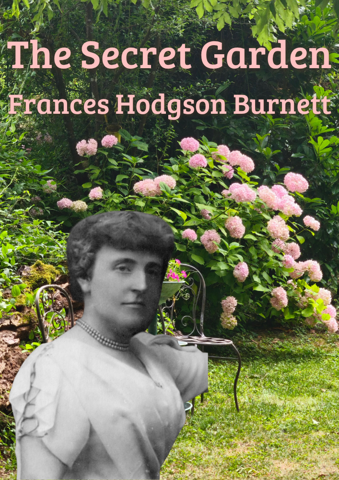
Burnett published the novel serially in 1910 and as a book in 1911, drawing on garden culture, ideas about health, and the country-house tradition. Its Yorkshire setting lets neglected rooms, locked spaces, weather, and seasonal labor register changes that dialogue alone cannot explain.
Story introduction:
An isolated child sent from colonial India discovers a closed garden and gradually forms new relationships around its restoration. The story guide stops there: its interest lies in how shared work, secrecy, outdoor movement, and attention alter a household rather than in listing every revelation.
Literary form:
The novel uses an observant third-person narrator, comic contrasts in speech, recurring cries and sounds, and the garden's calendar as a structural clock. Modern readers should also notice how disability, colonial privilege, servants, and regional dialect are framed by early twentieth-century assumptions.
Central themes:
An isolated child sent from colonial India discovers a closed garden and gradually forms new relationships around its restoration. The story guide stops there: its interest lies in how shared work, secrecy, outdoor movement, and attention alter a household rather than in listing every revelation. Beyond that immediate situation, The Secret Garden examines children's literature, gardens, grief, disability, friendship, Yorkshire. Within Burnett's career, the novel brings her transatlantic experience and interest in childhood into a country-house renewal story. Its strongest afterlife is not a vague message about healing but a reproducible dramatic design: a locked place, collaborative cultivation, and a household reorganized by children's actions. Together, these concerns give the conflict its moral and historical weight beyond the immediate plot.
Director: Agnieszka Holland
Production country: United States and United Kingdom
Principal cast: Kate Maberly, Heydon Prowse, Maggie Smith
Why this version matters: This identifiable production provides a useful comparison between the selected text and a major screen interpretation associated with named filmmakers and performers.
Difference from the book: It changes the family history and gives the returning adults a more prominent climactic role. The change affects point of view, pacing, or the balance among mystery, romance, horror, and social context; viewers should therefore treat the film as an interpretation rather than a visual substitute for the novel.
Screen interpretation:
The named adaptation changes the family history and gives the returning adults a more prominent climactic role. For The Secret Garden, that choice changes the weight given to children's literature, gardens, grief, disability, friendship, Yorkshire: visible action replaces some of the prose’s control over voice and delay, while the performances give particular faces and bodies to relationships that the book can keep uncertain. The screen version therefore creates a distinct emphasis rooted in this work’s specific narrative problem.
Edition history:
is a complete English text. Many current editions modernize dialect, shorten the opening in India, add illustrations, or adapt the story for younger readers; those changes improve accessibility for some readers but can erase the novel's historical language and social hierarchy. Selected intake is the complete text without relying on modern illustrations. The history of The Secret Garden is especially sensitive to its 27 chapters, because abridgment or revision can alter the balance among children's literature, gardens, grief, disability, friendship, Yorkshire.
Translation history:
The Secret Garden was written in en; this record uses the original-language text rather than a translation. Translations must recreate the book’s treatment of children's literature, gardens, grief, disability, friendship, Yorkshire, including differences of register, dialogue, and historically specific vocabulary that shape Frances Hodgson Burnett’s effects.
Place in literary history:
Within Burnett's career, the novel brings her transatlantic experience and interest in childhood into a country-house renewal story. Its strongest afterlife is not a vague message about healing but a reproducible dramatic design: a locked place, collaborative cultivation, and a household reorganized by children's actions.
Place in the author's career:
Within Burnett's career, the novel brings her transatlantic experience and interest in childhood into a country-house renewal story. Its strongest afterlife is not a vague message about healing but a reproducible dramatic design: a locked place, collaborative cultivation, and a household reorganized by children's actions. Within Frances Hodgson Burnett’s career, The Secret Garden is distinguished by an English children's novel using a hidden garden, changing seasons, and shared activity to connect grief, health, friendship, and belonging. It gathers the author’s concerns into a structure where children's literature, gardens, grief, disability, friendship, Yorkshire interact instead of standing as separate messages.
Continuing influence:
The Secret Garden continues to influence later storytelling through its handling of children's literature, gardens, grief, disability, friendship, Yorkshire. Within Burnett's career, the novel brings her transatlantic experience and interest in childhood into a country-house renewal story. Its strongest afterlife is not a vague message about healing but a reproducible dramatic design: a locked place, collaborative cultivation, and a household reorganized by children's actions. Its afterlife shows how a historically specific work can generate new interpretations while the original retains complications that simplified cultural versions leave aside.
Miva: the next reading experience beyond audiobooks
Listen like an audiobook, then ask anything, anytime.
Start Miva's narrationMiva does not just narrate. It keeps explaining based on what you ask.