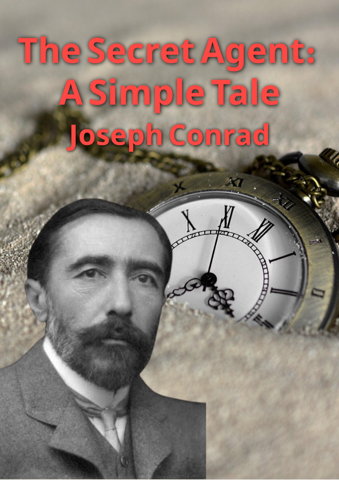
The Secret Agent intertwines London spies, anarchists, and domestic tragedy to describe how political violence permeates daily life in the modern city. Conrad does not portray terrorism as a simple conspiracy; instead, he exposes how laziness, poverty, indifference, marital pressure, and the state apparatus collectively manufacture disaster.
Conrad's status as an exile, his experience as a seaman, and his sensitivity to imperial politics made him exceptionally skilled at depicting invisible networks of power. Moving from the sea to the city, The Secret Agent retains the same moral darkness: individuals are pushed between systems, money, and ideology, until finally, even the family becomes a site of political explosion.
It can be read alongside Don DeLillo’s Libra or Mao II, the espionage ethics of John le Carré, and modern stories regarding surveillance and radicalization. The book is strikingly modern because it understands that political violence often begins with the banal.
The dark power of The Secret Agent comes from its refusal to romanticize political violence. Verloc is not a glamorous spy hero, but a tired, vulgar, exploited small-timer; the revolutionaries are not pure idealists, but individuals with their own vanities, grievances, and abstract cruelties. Conrad weaves a conspiracy of explosion through London’s shops, families, police, and diplomatic networks, allowing readers to see that modern political disasters are often not caused by a single demon, but amplified by many banal motives.
Included in this curation, this book corresponds to urban political anxiety. Unlike Lord Jim, which focuses on personal shame, it expands shame, apathy, and institutional calculation into social structures. The family line makes the novel particularly cruel: public conspiracies do not end with newspaper headlines but destroy the most fragile private relationships. Modern readers can connect it to terrorism studies, the surveillance state, radicalization narratives, and media events; Conrad wrote of a fear familiar to us today as early as the turn of the 20th century: no one is fully in control, yet everyone’s compromise drives the situation forward.
Miva: the next reading experience beyond audiobooks
Listen like an audiobook, then ask anything, anytime.
Start Miva's narrationMiva does not just narrate. It keeps explaining based on what you ask.