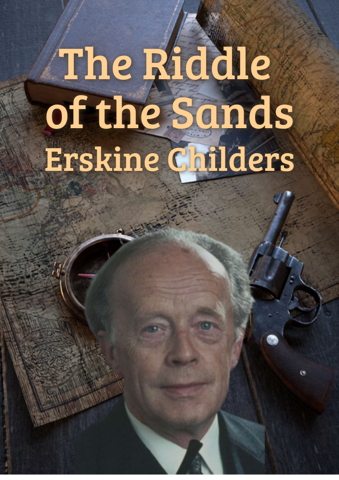
Background:
Published in 1903, Childers's novel combines amateur sailing detail with invasion anxiety and arguments about British naval preparedness. The North Sea coast, tides, shoals, charts, and small-craft seamanship are not decorative realism; they form the investigative method.
What kind of book is it?
Carruthers accepts an invitation to sail with Davies through the German Frisian Islands and discovers that his friend's suspicions point toward a larger secret. Leisure cruising becomes reconnaissance as the men learn to read discrepancies between landscape, chart, and official explanation.
Literary style:
Carruthers's retrospective narration, Davies's technical knowledge, maps, logs, measured sailing sequences, and gradual conversion from social boredom to political alarm create documentary suspense. Competence grows through collaboration rather than sudden deduction.
Reading focus:
Davies and Carruthers begin with different habits of attention. Davies understands tides, weather, shoals, boats, and small discrepancies in behavior; Carruthers brings social confidence and gradually learns to treat technical detail as evidence. Their partnership turns amateur cruising into investigation without abandoning the physical demands of sailing. The Frisian coast is ideal for this design because land and water continually alter one another: channels move, visibility changes, and a chart can be both indispensable and incomplete. Readers should notice how suspicion grows from accumulated irregularities rather than from a single sensational revelation. Comfort also matters. Carruthers's movement away from metropolitan routine makes preparedness feel like a moral awakening, which connects the adventure to the novel's argument about national defense. That argument belongs to the political anxieties before the First World War and should not be mistaken for neutral prediction. Even so, the book's procedural realism remains compelling because its intelligence work is grounded in patience, cooperation, and the disciplined reading of an environment that resists haste.
Director: Tony Maylam/Production: United Kingdom
Principal cast: Michael York, Simon MacCorkindale, Jenny Agutter
Why this adaptation:
Tony Maylam's 1979 film is the principal theatrical adaptation and makes Childers's chart-based sailing investigation into visible action.
One important difference:
condenses the sailing investigation, strengthens the romantic plot, and turns the final discovery into a more conventional action climax.
Edition focus:
The twenty-eight chapters depend on maps, charts, tides, and sailing observations, so editions that omit the visual material make the investigation harder to follow.
Reading recommendation:
Choose a complete edition with legible maps and nautical notes; historical commentary on pre-1914 invasion anxiety helps place its strategic argument without turning the novel into a timeless prophecy.
Cultural significance:
Frequently cited as an early modern spy novel, the book also belongs to invasion literature and sailing narrative. Its practical geography influenced later espionage realism, while its nationalism and assumptions about Germany belong to the prewar political moment.
Relationship between author and work:
Childers's only novel unites his practical sailing expertise with his contemporary campaign for naval preparedness; his later Irish nationalism gives its British strategic anxiety a particularly complex biographical afterlife.
Miva: the next reading experience beyond audiobooks
Listen like an audiobook, then ask anything, anytime.
Start Miva's narrationMiva does not just narrate. It keeps explaining based on what you ask.