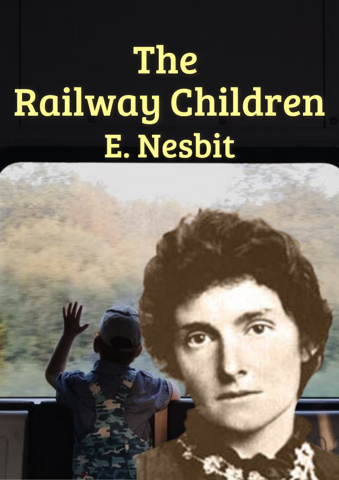
Background:
Published in 1906, the novel places domestic hardship beside the expanding railway system, whose workers, passengers, signals, timetables, and communications become part of community life. Nesbit writes for children without pretending that money, illness, imprisonment, and adult secrecy do not shape their world.
What kind of book is it?
After their father's unexplained disappearance, three children move with their mother to a cottage near a railway. Their experiments in helping others gradually connect local adventures to the unresolved crisis within their own family.
Literary style:
A conversational narrator addresses readers directly, balances episodic rescues with a sustained family mystery, and gives practical objects emotional weight. Humor frequently corrects the children's confidence without mocking their capacity for moral action.
Reading focus:
Railway life teaches the children to read a system larger than their household. Signals, schedules, tunnels, cuttings, platforms, telegraphy, and the labor of station employees become tools through which they can understand danger and act together. Their good intentions are not always sufficient; the novel repeatedly distinguishes imaginative generosity from knowledge of how help should be given. Mother also complicates the apparent simplicity of the children's world. Her writing, budgeting, refusals, and partial explanations show adult labor continuing behind adventures the children experience more directly. The narrator respects their moral energy while gently correcting vanity and misunderstanding. Readers can track how communication moves through the book: letters are withheld or delivered, messages travel by train, public events conceal private causes, and strangers become connected through repeated encounters. The railway thus joins rather than merely divides places. Without revealing the resolution of the family mystery, the structure makes clear that local acts of attention gradually create the network through which a larger injustice can be addressed. This balance of practical action and emotional restraint is central to Nesbit's appeal.
Director: Lionel Jeffries/Production: United Kingdom
Principal cast: Dinah Sheridan, Jenny Agutter, Bernard Cribbins
Why this adaptation:
Lionel Jeffries's 1970 version, featuring Jenny Agutter and Bernard Cribbins, became a representative British family-film interpretation of the novel.
One important difference:
condenses episodes while preserving the family mystery and makes the Yorkshire railway landscape a central visual presence.
Edition focus:
The fifteen chapters form an episodic sequence around one continuing family mystery, so heavily abridged children's editions can weaken the novel's careful return of clues.
Reading recommendation:
Choose a complete text with British railway terms explained; period illustrations or railway notes can clarify practical details without replacing Nesbit's conversational narration.
Cultural significance:
The book remains closely associated with British railway heritage and family adaptation. Its durable appeal lies in joining recognizable childhood initiative to adult systems of work and justice rather than sealing adventure away from social consequence.
Relationship between author and work:
Nesbit's realistic family novel demonstrates that her interest in children's agency did not depend on overt magic; railway labor and communication perform the structural work that fantasy objects play elsewhere.
Miva: the next reading experience beyond audiobooks
Listen like an audiobook, then ask anything, anytime.
Start Miva's narrationMiva does not just narrate. It keeps explaining based on what you ask.