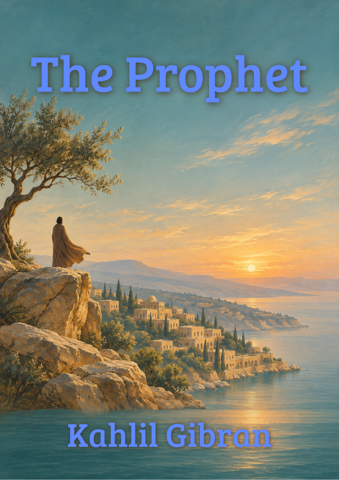
Gibran frames reflection as a series of departures. Before leaving a city, Almustafa is asked about love, work, children, freedom, pain, and death; each answer is brief enough to be remembered but structured to resist becoming a commandment. The book's attraction lies in this tension between aphoristic clarity and a voice that repeatedly turns abstraction back into image, rhythm, and relation.
It is most rewarding when read in portions rather than mined for isolated quotations. A passage may sound consoling on its own yet become more searching beside the questions that precede and follow it.
Director: Roger Allers, with individual animation-segment directors
Production country: United States / France / Lebanon
Cast: Salma Hayek, Liam Neeson, Quvenzhané Wallis
Why it matters: The film was an official selection at Cannes and premiered in North America at the Toronto International Film Festival.
Difference from the book: It places the poems inside a new story about an exiled poet, a mother and daughter, and authorities trying to prevent his departure.
The complete English text is organized by the questions posed to Almustafa, and those divisions are part of its reading rhythm. For a first reading, keep the chapter sequence intact and allow pauses between sections; the book is designed for return rather than rapid consumption.
The Prophet occupies a singular place in Gibran's English-language writing because it converts philosophical reflection into a portable, ceremonial form. Reading the whole book restores the sense of a speaker answering a community, not delivering detached maxims.
Miva: the next reading experience beyond audiobooks
Listen like an audiobook, then ask anything, anytime.
Start Miva's narrationMiva does not just narrate. It keeps explaining based on what you ask.