Background:
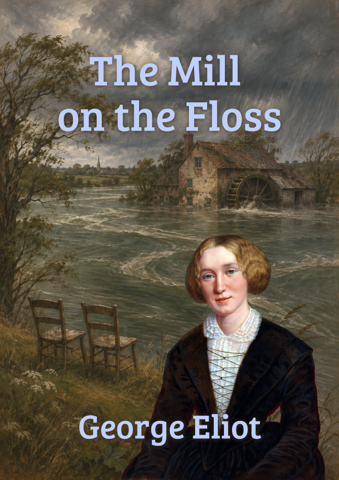
Published in 1860, the novel draws on the social world of provincial England to examine family business, education, gendered expectations, sibling loyalty, property, and memory.
The central tension:
Maggie and Tom Tulliver grow up around Dorlcote Mill as affection and rivalry are reshaped by financial crisis and unequal opportunities. The guide keeps later choices unspoiled while emphasizing how childhood judgments persist into adult life.
How the writing works:
An omniscient narrator moves between irony and sympathy, uses long developmental arcs, returns to landscapes and objects, and sets Maggie's inward intensity against institutions that grant her little room to act.
Dorlcote Mill is more than a picturesque setting: water, machinery, debt, and inherited business bind the Tulliver family to a landscape that can nourish and overwhelm them. Maggie's hunger for books, affection, and a larger intellectual life repeatedly collides with the narrower future imagined for her. Tom's sense of duty is real, but so is the damage done when duty hardens into a right to judge.
Eliot devotes unusual space to childhood because later conflicts depend on habits formed before either sibling understands them. Games, punishments, family visits, and small humiliations establish the emotional vocabulary Maggie and Tom will carry into crisis. The narrator can be satirical about provincial pretension while remaining exact about the pain of wanting love from people whose moral language leaves little room for complexity.
This is a novel for readers interested in how families preserve injuries as faithfully as possessions. Watch the changing meanings of the mill, the river, books, hair, and household objects across the seven books. Their recurrence turns memory into structure and gives the final movement an inevitability that a plot summary cannot reproduce.
Maggie's tragedy begins long before the adult crisis usually used to summarize the book. As a child she is told that her intelligence is excessive, her appearance unruly, and her strongest feelings dangerous. Tom loves her, but his love is bound to a moral certainty that leaves little room for motives unlike his own. Eliot makes their early games and quarrels matter because family roles become scripts: once repeated often enough, they determine who is trusted when the stakes grow serious.
The mill and river give those pressures a physical form. Water sustains the family business, marks the landscape of childhood, and carries the threat of forces no household can control. Books offer Maggie an imagined elsewhere, but renunciation can become another appetite when it promises freedom from conflict. The novel's power lies in refusing to make desire or duty sufficient by itself. It understands how a person can be judged by a single public moment while years of restraint, work, and inward struggle remain invisible.
The novel earns its emotional force by letting readers know Maggie before society decides what she means. We see the intelligence behind the impulsive act, the hunger beneath renunciation, and the family history inside a public scandal. That intimacy makes later judgments almost unbearable. Readers who have felt reduced to one mistake—or who have watched family love become inseparable from family control—will recognize the book's deepest wound. Its river remains memorable because the entire novel has taught us how memory, desire, and circumstance gather like water.
Director: Graham Theakston
Production country: United Kingdom
Cast: Emily Watson, Bernard Hill, Cheryl Campbell
Difference from the book: compresses seven books into a feature-length television film and reduces the narrator's extended social and psychological commentary.
The seven-book progression from childhood to adulthood is essential: cutting the early family life weakens the emotional causality of the later crisis.
The novel remains a major account of sibling bonds and the costs imposed when a woman's intelligence and desire exceed the roles available to her.
Miva: the next reading experience beyond audiobooks
Listen like an audiobook, then ask anything, anytime.
Start Miva's narrationMiva does not just narrate. It keeps explaining based on what you ask.