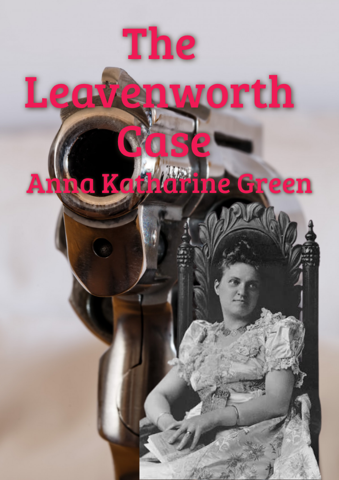
Historical background:
Green published the novel in 1878, when full-length detective fiction in the United States was still developing recognizable procedures. Its lawyer narrator works beside New York detective Ebenezer Gryce, allowing legal loyalty and investigative inference to pull the story in different directions.
Story introduction:
A wealthy man is found shot inside his mansion, and the household's arrangement appears to narrow suspicion toward those closest to the inheritance. The guide avoids listing suspects and focuses on how testimony changes when affection, status, and secrecy shape what can be said.
Literary form:
Documents, room layouts, missing objects, coroner's evidence, interviews, and deductions accumulate through first-person narration. Green also gives women central roles as witnesses and possible agents, complicating the period assumption that detection is exclusively masculine work.
Central themes:
A wealthy man is found shot inside his mansion, and the household's arrangement appears to narrow suspicion toward those closest to the inheritance. The guide avoids listing suspects and focuses on how testimony changes when affection, status, and secrecy shape what can be said. Beyond that immediate situation, The Leavenworth Case examines detective fiction, locked room, inheritance, legal evidence, New York, women in crime fiction. The novel established Green's long career and contributed to American detective conventions before the Sherlock Holmes stories. Its cultural importance is concrete: a sustained police-and-lawyer investigation, a domestic crime scene, and women whose motives cannot be reduced to decorative mystery. Together, these concerns give the conflict its moral and historical weight beyond the immediate plot.
Director: Charles Giblyn
Production country: United States
Principal cast: Seena Owen, Martha Mansfield, Wilfrid North
Why this version matters: This identifiable production provides a useful comparison between the selected text and a major screen interpretation associated with named filmmakers and performers.
Difference from the book: It compresses the lawyer-narrator's extended evidence gathering and the novel's layered household testimony into silent-film action. The change affects point of view, pacing, or the balance among mystery, romance, horror, and social context; viewers should therefore treat the film as an interpretation rather than a visual substitute for the novel.
Screen interpretation:
The named adaptation compresses the lawyer-narrator's extended evidence gathering and the novel's layered household testimony into silent-film action. For The Leavenworth Case, that choice changes the weight given to detective fiction, locked room, inheritance, legal evidence, New York, women in crime fiction: visible action replaces some of the prose’s control over voice and delay, while the performances give particular faces and bodies to relationships that the book can keep uncertain. The screen version therefore creates a distinct emphasis rooted in this work’s specific narrative problem.
Edition history:
provides the complete English novel. Modern editions may change chapter typography or omit the subtitle A Lawyer's Story; readers should preserve the narrator's professional position and avoid importing later Amelia Butterworth novels into this case. Complete English text from 4047. The history of The Leavenworth Case is especially sensitive to its a chaptered first-person detective novel, because abridgment or revision can alter the balance among detective fiction, locked room, inheritance, legal evidence, New York, women in crime fiction.
Translation history:
The Leavenworth Case was written in en; this record uses the original-language text rather than a translation. Translations must recreate the book’s treatment of detective fiction, locked room, inheritance, legal evidence, New York, women in crime fiction, including differences of register, dialogue, and historically specific vocabulary that shape Anna Katharine Green’s effects.
Historical resonance:
The circulation of The Leavenworth Case has repeatedly foregrounded detective fiction, locked room, inheritance, legal evidence, New York, women in crime fiction. Serial, illustrated, classroom, screen-related, and digital forms divide attention differently across a chaptered first-person detective novel; this changing material life helps explain why some episodes became cultural shorthand while other parts of Anna Katharine Green’s design remain discoveries for new readers.
Place in literary history:
The novel established Green's long career and contributed to American detective conventions before the Sherlock Holmes stories. Its cultural importance is concrete: a sustained police-and-lawyer investigation, a domestic crime scene, and women whose motives cannot be reduced to decorative mystery.
Place in the author's career:
The novel established Green's long career and contributed to American detective conventions before the Sherlock Holmes stories. Its cultural importance is concrete: a sustained police-and-lawyer investigation, a domestic crime scene, and women whose motives cannot be reduced to decorative mystery. Within Anna Katharine Green’s career, The Leavenworth Case is distinguished by an American detective novel narrated by a young lawyer who works alongside Ebenezer Gryce to test testimony, inheritance motives, household evidence, and apparently incompatible clues. It gathers the author’s concerns into a structure where detective fiction, locked room, inheritance, legal evidence, New York, women in crime fiction interact instead of standing as separate messages.
Continuing influence:
The Leavenworth Case continues to influence later storytelling through its handling of detective fiction, locked room, inheritance, legal evidence, New York, women in crime fiction. The novel established Green's long career and contributed to American detective conventions before the Sherlock Holmes stories. Its cultural importance is concrete: a sustained police-and-lawyer investigation, a domestic crime scene, and women whose motives cannot be reduced to decorative mystery. Its afterlife shows how a historically specific work can generate new interpretations while the original retains complications that simplified cultural versions leave aside.
Miva: the next reading experience beyond audiobooks
Listen like an audiobook, then ask anything, anytime.
Start Miva's narrationMiva does not just narrate. It keeps explaining based on what you ask.