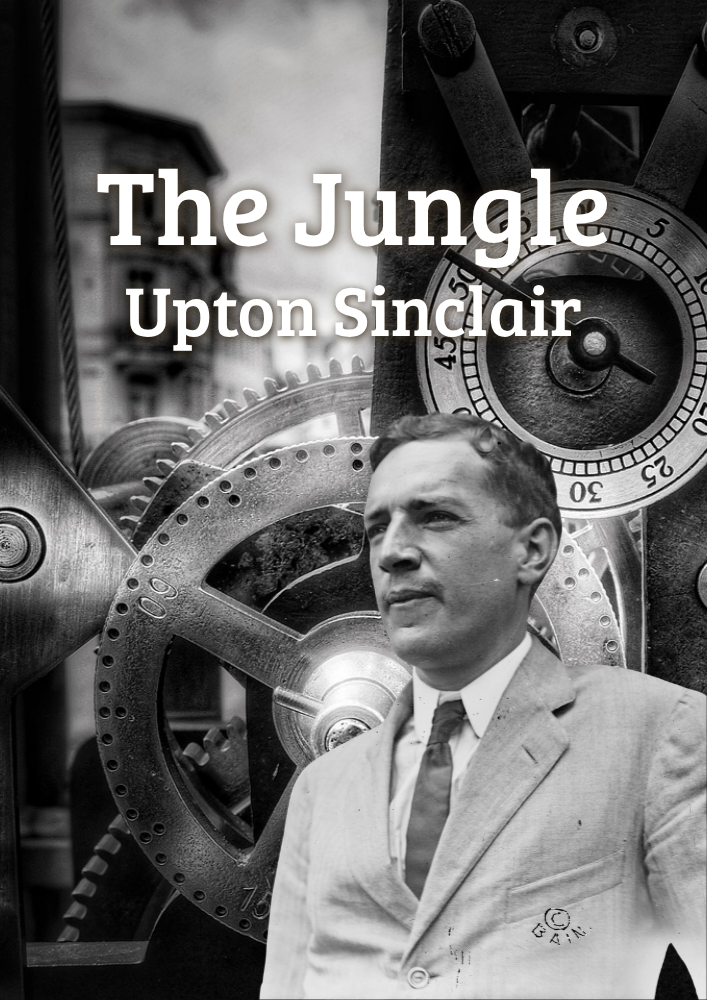
Work Background:
The Jungle, by Upton Sinclair, first appeared in 1906. Sinclair wrote from direct investigation in Packingtown and intended a socialist argument; the public response focused strongly on food safety, revealing the gap between authorial aim and reception. The novel joined literary naturalism to investigative reform and helped make industrial food production and immigrant labor matters of broad public debate. The novel joins immigrant family tragedy to an investigation of industrial labor, housing, food production, and political organization in Chicago. Its final movement becomes openly argumentative and socialist. This context explains the work's choice of voice, structure, and genre, while helping readers recognize the literary setting and social institutions surrounding its first publication or performance. Readers may notice how public rules enter private judgment, how repeated images change meaning, and how form controls what can be known at each stage.
Story Overview:
Lithuanian immigrant Jurgis Rudkus and his family seek security through work in Chicago's meatpacking district. Injury, debt, housing fraud, unsafe labor, and political corruption steadily undo their plans, leading the novel from family experience toward an explicit argument for collective political change. This summary identifies only the central situation and direction without revealing the ending. As speakers, settings, scale, or social positions change, earlier events take on new meanings; the work's effect lies not only in its incidents but also in pacing, point of view, silence, and the distance between what characters understand and what readers can infer.
Director: George Irving, John H. Pratt, and Augustus E. Thomas
Production country: United States
Principal cast: George Nash, Gail Kane, and Julia Hurley
Difference from the book: The silent film, made with Sinclair's participation, necessarily condensed the novel's long social investigation and political argument into photographed dramatic episodes; the film is now considered lost.
The selected full text is the verified digital edition numbered 140. Market titles include: The Jungle; La Jungle; Der Dschungel; La jungla; 屠場; ジャングル. When choosing an edition, distinguish complete, abridged, annotated, modernized, and collected versions, and verify the translator, publisher, and year for each.
The novel joined literary naturalism to investigative reform and helped make industrial food production and immigrant labor matters of broad public debate. Sinclair wrote from direct investigation in Packingtown and intended a socialist argument; the public response focused strongly on food safety, revealing the gap between authorial aim and reception. These qualities place the book at a specific point in the author's career and in the development of its genre. Its influence rests on recognizable questions of language, structure, history, and judgment rather than on a vague label of “classic.” Reading the full text beside another translation, stage production, or film reveals what later editors, translators, actors, and directors preserve, explain, compress, or rearrange, and brings out formal effects that summaries often conceal.
Reading another work from the same author's career also shows which concerns persist and which methods change. The book remains open to interpretation, disagreement, and rereading because readers can return to its actual language and arrangement instead of allowing later reputation to replace the experience of reading.
Miva: the next reading experience beyond audiobooks
Listen like an audiobook, then ask anything, anytime.
Start Miva's narrationMiva does not just narrate. It keeps explaining based on what you ask.