Introduction
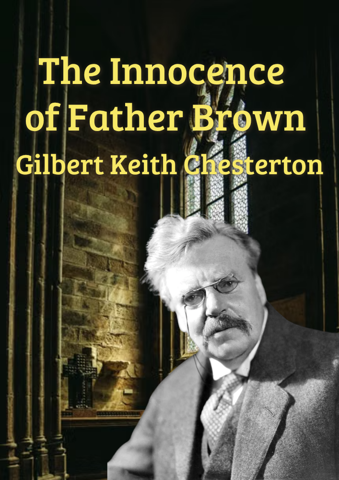
Background: The Innocence of Father Brown is the first collection of short stories in the series, published at a time when detective fiction had already formed clear genre expectations. Chesterton went against the grain by making an ordinary-looking, almost inconspicuous Catholic priest his investigator. This setting shifted the focus of mystery from scientific forensics and arrogant geniuses to sin, confession, temptation, and conscience, carving out a sub-genre of classical mystery colored by religious psychology. This background is not just a chronological note; it determines how the work understands power, desire, and individual choice. If readers grasp this historical context first, they can see the deeper cultural anxieties and value conflicts behind the plot.
Summary: In the book, Father Brown faces various seemingly impossible or absurd cases, including mysterious thefts, bizarre murders, identity mistakes, and misleading appearances. The famous master thief Flambeau also appears in the stories, serving as an intellectual and moral contrast to the priest. While others are distracted by spectacles, Father Brown often spots the criminal's true psychological flaws, bringing the case back from clever tricks to the choices of the human heart. Reading these plots can be seen as a series of tests: how characters face misjudgment, temptation, loss, or desire is often more important than the events themselves. The progression of these stories allows the classic to remain relevant to modern experience, returning it to the reader's judgment.
Literary Features: The charm of this book lies in its highly condensed short story structure and strong reversals. Chesterton makes excellent use of vivid imagery, grotesque atmospheres, and philosophical dialogues, making each story feel like a parable. Father Brown's "innocence" is actually insight; he is not deceived by authority, status, or flashy scenes. Beyond entertainment, the work constantly asks: why do people commit crimes, and how do they disguise sin as reasonable or noble causes? Its beauty lies not just in plot or language, but in how it transforms ideas into perceptible scenes and character actions. The reversals, contrasts, symbolism, and shifts in tone provide layers that make it worth re-reading, transcending simple genre entertainment.
Encyclopedia
Author's Life: Chesterton produced a staggering volume of writing throughout his life, active in newspaper commentary and public debate before later converting to Catholicism. His writing is known for its "uncommon common sense," humor, and argumentative power. The character of Father Brown was partially inspired by the real-life Father John O'Connor; the author was amazed by the depth of human nature the priest understood through confession and translated this understanding into a unique detective skill. Understanding the author's life helps identify recurring themes: power, faith, identity, displacement, frustration, or the obsession with beauty. These life experiences are not the sole explanation for the work, but they provide a solid entry point for reading.
Relationship Between Author and Work: The Innocence of Father Brown demonstrates how Chesterton brought faith into genre fiction. He did not write the priest as a preacher, but as the person who understands sin best. The puzzles in the work often baffle secular rationality but do not negate reason itself; instead, they remind the reader: without understanding pride, greed, envy, and fear, even the most precise reasoning will miss the most critical motives. Thus, when reading this book, one can observe how the author's intellectual concerns are transformed into characters, plots, and narrative rhythm. The work does not simply state the author's position but lets these positions undergo testing within the story, which is why classics can engage in cross-generational dialogue.
Classic Mirroring: The BBC's Father Brown has continued to air for nearly a decade, transforming the characters from the early short stories into long-running series icons. The TV show adds more community relationships, humorous interactions, and period customs, making the priest not just a puzzle solver but also a repairer of village social order. In contrast, the original work is more refined and sharper, often using a single paradox at the end to twist the entire story, with an intellectual density higher than the comfortable pace of the series. Such a comparative reading is not about treating the adaptation as a replacement for the original, but about seeing how the same set of questions is reorganized across different media. Film often magnifies visuals, rhythm, and contemporary issues, while the original preserves finer linguistic layers and logic."
Miva: the next reading experience beyond audiobooks
Listen like an audiobook, then ask anything, anytime.
Start Miva's narrationMiva does not just narrate. It keeps explaining based on what you ask.