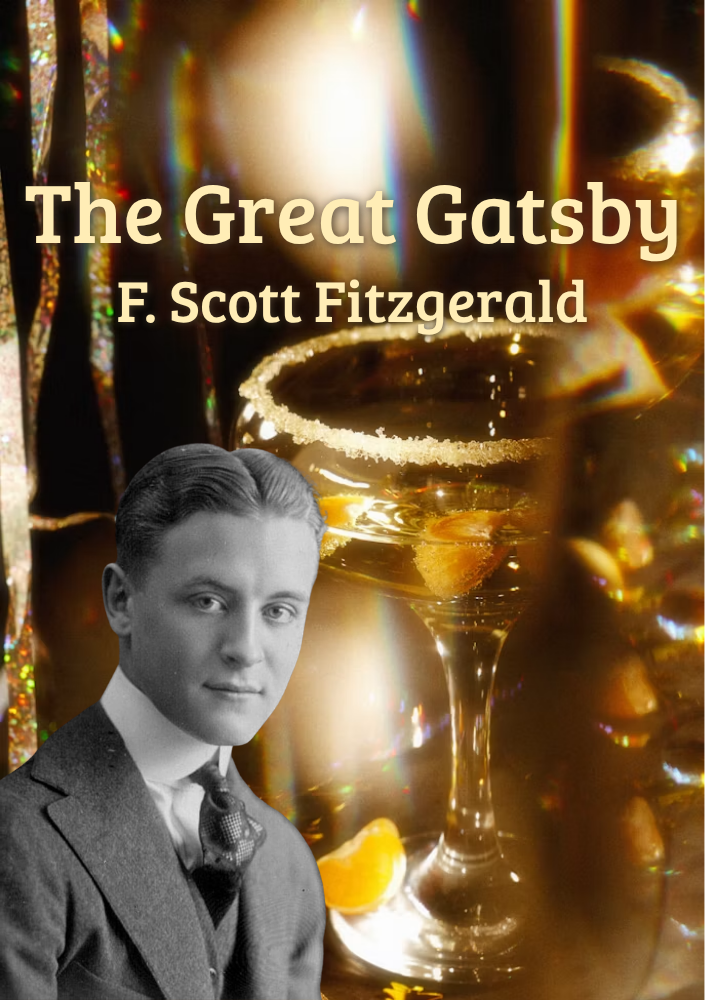
Background: The American Jazz Age was famous for wealth, parties, Prohibition, and speculative prosperity, yet it also concealed class anxiety and moral emptiness. Fitzgerald wrote a dream of love as the disillusionment of the American Dream. The emergence of The Great Gatsby connects contexts such as the Jazz Age, the American Dream, Fitzgerald, class, and modern classics. It does not treat the era as a decorative backdrop; instead, it allows social change, class pressure, post-war spirit, and the sense of the modern city to permeate the characters' tones, choices, and silences. Readers can thus understand why this work echoed in its time and see the cultural issues it addresses.
Synopsis: Nick Carraway moves to Long Island and meets the mysterious millionaire Gatsby. Gatsby uses his mansion and lavish parties to summon his former love, Daisy, attempting to turn back time. However, the illusions built by money cannot bridge the fissures of class, cowardice, and reality. As the story progresses, The Great Gatsby relies not only on plot twists but also on character relationships, shifts in perspective, and the accumulation of scenes to create tension. Readers follow the main characters into the dilemmas of romance, travel, family, social life, or spiritual exploration, gradually seeing how surface order is moved by desire, memory, responsibility, and misunderstanding. The core plot is preserved here while avoiding premature disclosure of the most critical ending impact.
Literary Features: Readers can understand how the brilliance and corruption of the Jazz Age coexist, and see how narrative distance, symbolic imagery, and a short-form structure together shape a classic. The green light is not just hope, but an obsession that refuses to wake up. Regarding literary features, what is noteworthy about The Great Gatsby is not its abstract "classic" status, but how it utilizes narrative rhythm, symbolic imagery, character voices, and structural arrangement to make loneliness, disillusionment, or spiritual crises a tangible reading experience. It is also suitable for reading alongside other modernist, Jazz Age, and post-war literary works to observe how different writers handle individuals in a fragmented era.
Encyclopedia of the Work
Author Biography: F. Scott Fitzgerald (1896-1940) was one of the most symbolic novelists of the American Jazz Age. He used gorgeous, lyrical, and melancholic prose to describe wealth, youth, parties, love, and the shattering of the American Dream. Fitzgerald was particularly skilled at capturing the hollowness behind prosperous appearances and how people mistake desire for destiny and money for rebirth. His work is both a portrait of an era and a precise dissection of modern consumer culture and class fantasies. His creations belong not only to the entries of famous masters in literary history but are also frequently reread in university courses, book clubs, and cross-cultural discussions; the narrative forms, character psychology, and social observations in his work still provide a valid entry point for understanding modern life.
Relationship between Author and Work: The reason F. Scott Fitzgerald was able to write The Great Gatsby is closely related to his era, creative concerns, and literary ambitions. This work concentrates the issues the author long focused on—the Jazz Age, the American Dream, class, and modern classics—and transforms them into a readable experience through specific characters and narrative forms. It is not a simple projection of the author's life, but the result of the author combining personal observation, temporal pressure, and formal experimentation. Therefore, when reading this book, it is best to pay attention to both the author's life background and how the text reforges that background into literary form.
Film and Television Comparisons (Last Decade): In the last ten years, there has been a record of The Great Gatsby (2024) TV miniseries, adapting the classic story into a more contemporary media and technological context; it can also be read thematically alongside Babylon (2022). While the original work gazes at the money illusions of the Jazz Age through Nick's recollective narrative, recent visual works emphasize how party spectacles, celebrity culture, and mass media amplify desire. This comparison helps readers distinguish the literary focus of the original and the reinterpretation of rhythm, visuals, character focus, and contemporary issues in visual media, placing the classic back into today's viewing experience.
Miva: the next reading experience beyond audiobooks
Listen like an audiobook, then ask anything, anytime.
Start Miva's narrationMiva does not just narrate. It keeps explaining based on what you ask.