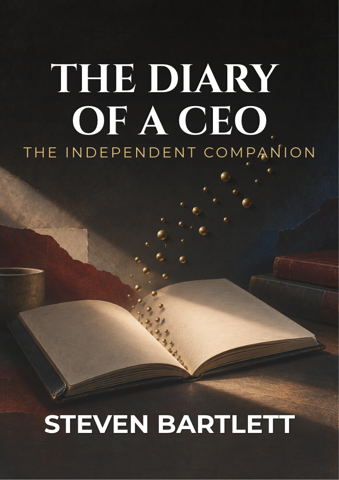
Strategies change with platforms and markets, but Steven Bartlett argues that the forces behind sustained success—self-story, skill, persuasion, team culture, and disciplined testing—are more durable. His thirty-three laws turn interviews and entrepreneurial experience into principles readers can challenge against their own work.
No. 1 Sunday Times Bestseller — September 2023.
Bartlett arranges thirty-three laws under four pillars: the self, the story, the philosophy, and the team. The early laws examine identity, discomfort, habits, and skill; the middle turns to persuasion, narrative, attention, experimentation, and strategic thinking; the final movement considers hiring, culture, standards, pressure, and leadership. Podcast interviews, company experience, behavioral studies, and memorable examples appear side by side, making source type an important part of reading critically.
Early laws connect identity, beliefs, habits, and discomfort to performance, preventing readers from treating strategy as detached from the person executing it.
The guide links framing, contrast, psychological tension, and communication choices while flagging where an illustrative example is not the same as general proof.
Later chapters shift from individual ambition to hiring, norms, pressure, and leadership, helping readers compare motivational advice with organizational responsibility.
Readers can track which laws are grounded in research, which emerge from entrepreneurial observation, and which function mainly as provocative rules of thumb. That distinction does not make the practical ideas useless; it makes them easier to test. The four-pillar structure also shows where personal discipline stops being enough and organizational design begins.
Entrepreneurs, managers, creators, and ambitious early-career readers are the natural audience. Those who enjoy principle-driven business books will find many discussion prompts, while evidence-focused readers should keep asking how broadly each law can travel beyond Bartlett’s industries and interview sample.
Edition notice: This is an independent chapter guide and summary, not the original book. It is designed for review and reading support and is best used alongside the full work.
Miva: the next reading experience beyond audiobooks
Listen like an audiobook, then ask anything, anytime.
Start Miva's narrationMiva does not just narrate. It keeps explaining based on what you ask.