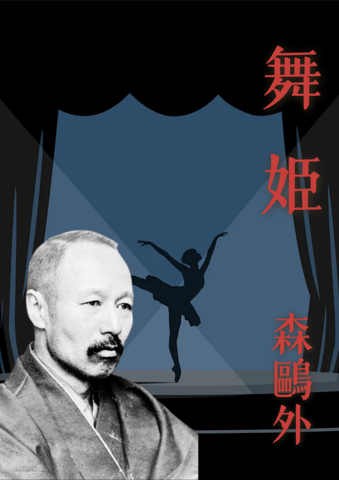
Background: Published in 1890, "The Dancing Girl" is an early masterpiece by Mori Ōgai. The story is told through the memories of Toyotaro Ota during his voyage back to Japan: once an elite bureaucrat of the Meiji state sent to Berlin, he met a dancer named Elise and gradually fell in love, thereby deviating from the path planned for him by the state and his career. Here, the foreign land is not merely a romantic stage, but a site where personal emotion first escapes institutional monitoring only to be reclaimed by it.
Literary Features: Written in a classical literary style, the work is brief yet possesses a powerful sense of compression. Toyotaro's narration resembles both a confession and a self-defense; he constantly explains how he was driven by orders, friends' advice, illness, and reality, yet the reader still senses that he made choices at critical moments. Mori Ōgai places love, career prospects, national duty, and masculine weakness within the same story, ensuring the work's resonance is not just one of sadness, but also of a moral sting.
Synopsis: Reading "The Dancing Girl" today easily brings to mind studying abroad, cross-cultural romance, and career choices. When a person leaves a relationship for the sake of their future, are they being mature or committing a betrayal? When he says "I had no choice," how much of "I chose this" is hidden within? This novella allows readers to see that behind every success story, someone is often left in the shadows, and the hardest thing to face is not the separation itself, but the desire to frame oneself as innocent afterward. Toyotaro Ota initially arrives in Germany as a brilliant young man sent by the state, full of expectations for Western cities and scholarship. After meeting Elise, he feels for the first time that personal emotion can transcend institutional arrangements, deviating from the safe path of a bureaucratic career. Their love is not purely romantic, as Toyotaro always carries the weight of national expectations and career pressure; the appearance of his friend Aizawa pulls him back to reality. The most memorable aspect of the work is that after Toyotaro chooses between love and his future, he still attempts to preserve his conscience through regret. This story requires no profound literary knowledge to appreciate; by following the character's choices, hesitations, and silences, one can feel the work slowly pushing a human predicament right before one's eyes.
Encyclopedia
Author's Life: Mori Ōgai (1862–1922) was a military physician, translator, and novelist. Having studied in Germany and holding roles as both a bureaucrat and a man of letters, he is a pivotal figure in modern Japanese literature.
Relationship between Author and Work: "The Dancing Girl" is closely related to Ōgai's own experiences in Germany, but it is more than just an autobiographical allegory; it is a literary examination of the spiritual structure of the Meiji elite.
Modern Analogy: It is like an apology letter written to an ex—on the surface, it speaks of fate and reality, but between the lines, it constantly reveals that the person truly making the decisions was oneself."
Miva: the next reading experience beyond audiobooks
Listen like an audiobook, then ask anything, anytime.
Start Miva's narrationMiva does not just narrate. It keeps explaining based on what you ask.