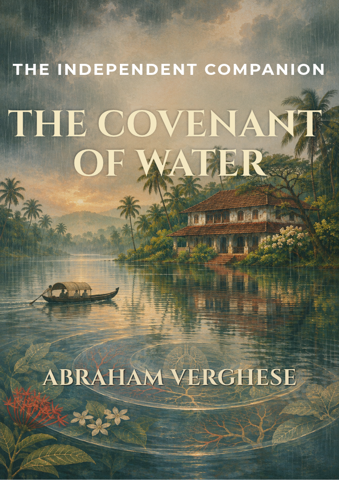
Across three generations in Kerala, one family carries an eerie pattern: in every generation, at least one person dies by drowning, even though water shapes nearly every part of their world.
This independent guide maps the novel’s long chronology, changing households, medical discoveries, and converging family histories while preserving the late revelations that explain how its lives connect. This is an independent chapter guide and summary, designed to clarify structure and interpretation rather than replace the original novel.
2023 Golden Poppy Book Award for Fiction — winner; 2023 BookBrowse Fiction Award — winner; 2024 Audie Award, Narration by the Author — finalist.
The novel turns a highly specific world into a test of memory, evidence, loyalty, and responsibility. Its formal design matters as much as its plot: chronology, viewpoint, recurring images, and withheld information change what a reader can know at each stage.
Beginning with a twelve-year-old bride and moving across more than seven decades, the novel lets illness, faith, caste, colonial institutions, and family loyalty accumulate before their connections become visible. This guide follows four practical tracks—date, place, kinship, and medical evidence—so readers can recognize echoes across generations without losing the emotional force of each life. It also distinguishes what characters call fate from what later observation can name, while preserving the revelations that make those two explanations converge.
Rivers, monsoon, wells, and drowning work as atmosphere, family fear, and eventually a problem that can be investigated. The guide tracks when water shifts from omen to evidence.
Clinical observation can save lives, but caste, colonial systems, disability, and professional ambition shape whose suffering is recognized. Chapter notes connect medical scenes to the family’s ethical choices.
The novel moves among Parambil, Madras, and other communities before apparently separate lives meet. The guide keeps dates and relationships clear without revealing the decisive connection too early.
Use this companion during a first reading, for book-club preparation, or when returning to a long and layered novel. It highlights chapter connections, historical or cultural pressure, and ethical questions while protecting the ending and decisive late reversals.
Edition notice: This is an independent chapter guide and summary, not the original book. It is best used alongside the complete work.
Miva: the next reading experience beyond audiobooks
Listen like an audiobook, then ask anything, anytime.
Start Miva's narrationMiva does not just narrate. It keeps explaining based on what you ask.