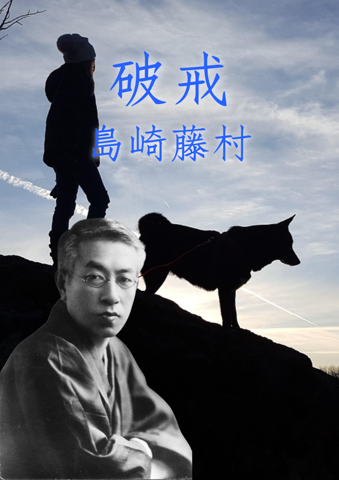
Background: Published in 1906, The Broken Commandment is a cornerstone of Japanese Naturalist literature. The protagonist, Ushimatsu Segawa, is a primary school teacher who has long hidden his identity as a member of the burakumin, a marginalized caste. Before passing away, his father left him with a strict commandment: "never reveal your origin." This commandment allows Ushimatsu to barely survive in society, but it also forces him to live in constant fear. While Meiji Japan claimed legal equality, prejudice continued to permeate marriage, careers, neighborhoods, and social perceptions, turning one's birth into an inescapable label.
Literary Features: Toson uses a naturalist approach to depict Ushimatsu's psychological pressure. The novel's tension stems not from physical pursuit, but from the fear that every conversation, rumor, or glance might expose his secret. As a teacher, Ushimatsu must teach students about morality and character, yet he cannot publicly acknowledge his own identity, making his suffering particularly acute. The work frames "confession" as a dilemma: speaking the truth might bring dignity, but it could also instantly destroy his life.
Summary: The Broken Commandment remains deeply relevant to modern readers. It evokes various dilemmas of identity disclosure: family background, class, illness, gender, ethnicity, or stigmatized pasts. When society demands honesty on one hand but prepares to punish differences on the other, honesty becomes an adventure rather than just a virtue. This book helps readers understand that shame is sometimes not a personal weakness, but social prejudice forced into the human heart. Beloved by his students and striving to be an upright teacher, Ushimatsu cannot find peace due to his secret. He admires Rentaro Inoko, a man from the same background who dares to speak out publicly, and this admiration begins to shake the commandment his father left behind. The novel portrays Ushimatsu's struggle between concealment and confession: his desire to keep his job, reputation, and peaceful life versus his inability to endure a daily silence that complies with prejudice. As the truth closes in, his choice becomes the heavy climax of the work. This story requires no deep literary knowledge to enter; by following the character's choices, hesitations, and silences, readers can feel the person's situation being slowly pushed before their eyes.
Encyclopedia
Author's Life: Shimazaki Toson (1872–1943) first gained fame as a Romantic poet before turning to fiction, becoming a leading figure in Japanese Naturalist literature.
Relationship between Author and Work: The Broken Commandment established Toson's status as a novelist and showcased his transition from lyricism to social realism and internal analysis. By confronting identity discrimination, the work holds a vital position in modern Japanese literary history.
Modern Analogy: It is like a person hiding their identity between their resume, family gatherings, and the office breakroom, until they realize that silence itself is slowly destroying them."
Miva: the next reading experience beyond audiobooks
Listen like an audiobook, then ask anything, anytime.
Start Miva's narrationMiva does not just narrate. It keeps explaining based on what you ask.