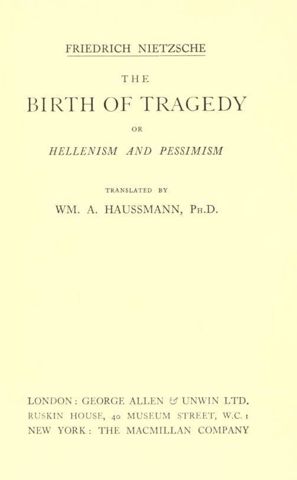
Friedrich Nietzsche's seminal work, 'The Birth of Tragedy; or, Hellenism and Pessimism,' published in 1872, presents a profound exploration of ancient Greek tragedy and its cultural significance. Nietzsche introduces his famous dichotomy between the Apollonian and Dionysian forces: the Apollonian representing order, reason, individuality, and measured beauty, while the Dionysian embodies chaos, emotion, intoxication, and primal unity. He posits that the zenith of Greek tragedy was achieved through a delicate synthesis of these opposing elements, allowing audiences to confront the full spectrum of human experience. Nietzsche critically traces the decline of tragedy, attributing it to the rise of Socratic rationalism and the influence of Euripides, which he believed undermined the vital Dionysian spirit. He controversially suggests that the operas of Richard Wagner might offer a modern resurgence of this lost artistic balance, making the book a crucial text in philosophy, aesthetics, and classical studies.
Reading ease score: 41.4 (College-level). Difficult to read.
Miva: the next reading experience beyond audiobooks
Listen like an audiobook, then ask anything, anytime.
Start Miva's narrationMiva does not just narrate. It keeps explaining based on what you ask.