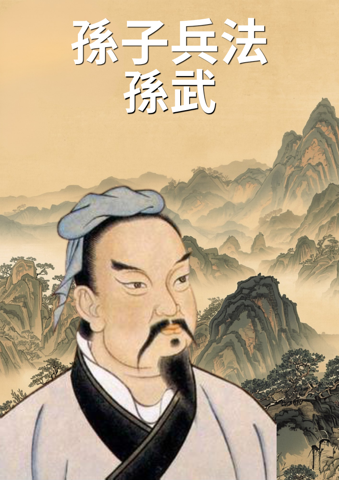
The Art of War, also known as Sunzi, Wujing, or Bingjing, was written by Sun Wu of the State of Qi during the late Spring and Autumn period. Its thirteen chapters are like thirteen rhythms of the battlefield, ranging from "Strategic Assessments" to "Use of Spies," forming a strategic philosophy centered on maneuvering and calculation. The text is as concise as a blade yet contains a high degree of abstraction, allowing later generations to draw upon its principles for military, political, or business strategy. Core propositions such as "War is a matter of vital importance to the state; a matter of life and death, the road to survival or ruin; it is a subject of inquiry which can on no account be neglected" elevate warfare to the highest level of national governance and existential rationality. Concepts like "To subdue the enemy without fighting is the acme of skill" established the core logic of achieving maximum victory with minimum cost in Eastern strategic thought. Its influence extends beyond military history to become the underlying model for modern film, television, games, and narrative design. For example, strategy games such as the Total War series, Europa Universalis, and various tactical RPGs translate its concepts of "using momentum to control form" and "using the extraordinary to defeat the normal." Films and series often use its concepts of "void and actuality," "luring the enemy," and "leaving an outlet for a surrounded army" to build narrative tension, making strategic thinking an invisible framework for plot progression. In modern cultural contexts, The Art of War has even been absorbed by corporate management and competitive systems, becoming a metaphorical tool for market competition and organizational decision-making, extending a strategic grammar across more than two thousand years.
Commentators throughout history have praised its value highly. Cao Cao stated in the Preface to Sunzi's Brief Explanation: "I have read many military books and battle tactics, but Sunzi's writing is the most profound," affirming that its theoretical depth far exceeded contemporary military texts. Emperor Taizong of Tang, Li Shimin, also remarked: "I have observed various military books, and none surpass Sun Wu," placing it at the pinnacle of military classics. British military strategist B.H. Liddell Hart pointed out that The Art of War covers almost the core principles of his twenty-plus strategic works, demonstrating its cross-cultural theoretical universality. Modern critics also argue that Sun Tzu's emphasis on "winning first and then going to war" and the "strategy of whole victory" actually constitutes a low-depletion competition model, leading to its continuous reinterpretation and reconstruction in digital game design, AI confrontation systems, and modern business competition analysis. Even in esports and football tactical design, "layout of void and actuality" and "rhythm control" can be traced back to its principles, forming a cross-disciplinary strategic language heritage. The text is therefore not just an ancient military guide, but an evolving framework for strategy generation.
Sun Tzu’s The Art of War begins with a fundamental truth: warfare is a matter of vital importance to the state, a realm of life and death. Victory is not decided on the battlefield alone, but in careful deliberation beforehand. Through five essential factors, the Moral Law, Heaven, Earth, the Commander, and Method, a leader calculates the chances of success. Above all, war is rooted in deception. A master strategist feigns weakness when strong, induces arrogance in the enemy, and strikes where they are unprepared, securing victory before the first blow is struck. Once campaign begins, efficiency is paramount. Prolonged warfare drains a nation's resources, exhausts its troops, and invites disaster. A wise commander moves with speed, limits expenses, and sustains the army by foraging from the enemy. True supreme excellence, however, lies not in winning a hundred battles, but in breaking the enemy’s resistance without fighting at all. The highest strategy is to thwart the enemy's plans and disrupt their alliances; attacking fortified cities is only a desperate last resort. Success belongs to those who possess deep self-awareness and insight into their opponent, for knowing both oneself and the enemy guarantees safety in every encounter. To maintain control, a general places the army in an invincible position, waiting patiently for the adversary to reveal a flaw. Tactical power flows like water, adapting constantly to the terrain and shifting circumstances. By employing direct and indirect tactics, the commander creates momentum, a force as irresistible as a boulder rolling down a steep mountain. Through strategic positioning, the army remains flexible, compelling the enemy to disperse their strength and react in confusion. The supreme goal is to become formless, leaving the enemy's spies with nothing to perceive. Navigating the battlefield requires precise maneuvers and keen observation. A leader must master the art of turning a circuitous route into a direct advantage and recognize subtle signs in the environment, from the sudden flight of birds to the rustling of trees, to uncover hidden danger. The environment itself plays a decisive role. Commanders must adapt to six types of terrain and nine strategic grounds, managing every situation from open passages to deadly traps where survival demands fierce, unwavering desperation. In extreme conditions, specialized methods such as fire attacks become necessary to disrupt the enemy’s ranks, though such destructive power must never be wielded out of anger or short-sighted emotion. To guide all these strategic decisions, reliable intelligence is indispensable. Victory relies on five types of spies, local, internal, converted, doomed, and surviving agents. Knowledge gained through these covert networks illuminates the darkness of war, enabling a wise ruler and a capable general to achieve extraordinary triumphs. The grand narrative of strategy concludes with this timeless law: ultimate mastery belongs to those who govern with wisdom, adapt without form, and foresee every outcome through secret knowledge.
Therefore, appraise it through five fundamental factors and compare them by calculations to seek out the underlying truth: the first is the Way; the second, Heaven; the third, Earth; the fourth, the Commander; and the fifth, Discipline.Original: 故經之以五事,校之以計,而索其情:一曰道,二曰天,三曰地,四曰將,五曰法。The Art of War 始計第一. It succinctly outlines the core philosophical taxonomy that governs all strategic analysis throughout the treatise.
Hence, the reason enlightened rulers and wise generals move and conquer the enemy, achieving triumphs surpassing the ordinary masses, is foreknowledge. Foreknowledge cannot be elicited from spirits and gods, nor deduced from analogous phenomena, nor verified through celestial measurements; it must be obtained from human beings who know the situation of the enemy.Original: 故明君賢將所以動而勝人,成功出於眾者,先知也。先知者,不可取於鬼神,不可象於事,不可驗於度,必取於人,知敵之情者也。The Art of War 用間第十三. It asserts a profoundly rationalist worldview that places human intelligence and factual knowledge at the center of critical decision-making.
The text itself is remarkably concise and written in a direct, axiomatic style. While its ancient Chinese origin means it relies on brief classical phrasing, its reliance on natural metaphors, such as water, terrain, and fire, makes the core principles accessible. The primary difficulty lies not in the vocabulary, but in grasping the high level of abstraction. Readers often find that commentary editions help bridge the gap between ancient military contexts and modern applications.
It is considered a classic because it abstracts warfare into a universal theory of competition and decision-making rather than focusing merely on ancient weaponry. Historical figures like Cao Cao and Emperor Taizong lauded its unmatched depth, while modern historians note its universal applicability across cultures. Today, its concepts of positioning and intelligence continue to shape business management, game design, and strategic planning.
The work views state resources and human life as vital assets that must never be squandered through emotional impulse or reckless sieges. Sun Wu explicitly warns that prolonged campaigns exhaust the treasury and corrupt military morale, inviting external threats. Consequently, the text treats resource management as a primary condition of victory, favoring swift action, foraging on enemy supplies, and bloodless strategic victories over prolonged conflict.
Information is the foundational pillar of the entire strategic architecture. The famous maxim regarding knowing oneself and knowing the enemy establishes that total situational awareness eliminates danger in conflict. The text systematically categorizes covert operations to demonstrate that secret intelligence alone provides the foresight necessary for a wise ruler to strike with certainty.
Terrain is treated as an active variable that can either amplify a force's strength or trap an unwary commander. The text classifies six types of ground and nine battle situations, offering specific rules of movement for each. By treating the physical setting as a tool to divide or corner opponents, a general uses environmental conditions to generate tactical momentum.
The final chapter shifts focus away from physical battlefields toward the invisible domain of covert intelligence and human networks. How secret agents are deployed across five operational categories, how information is verified, and how subtle knowledge determines the rise and fall of kingdoms are the exact revelations that crown the work. To experience how human intellect masterfully replaces physical violence in these final insights, read the text for yourself.
Miva: the next reading experience beyond audiobooks
Listen like an audiobook, then ask anything, anytime.
Start Miva's narrationMiva does not just narrate. It keeps explaining based on what you ask.