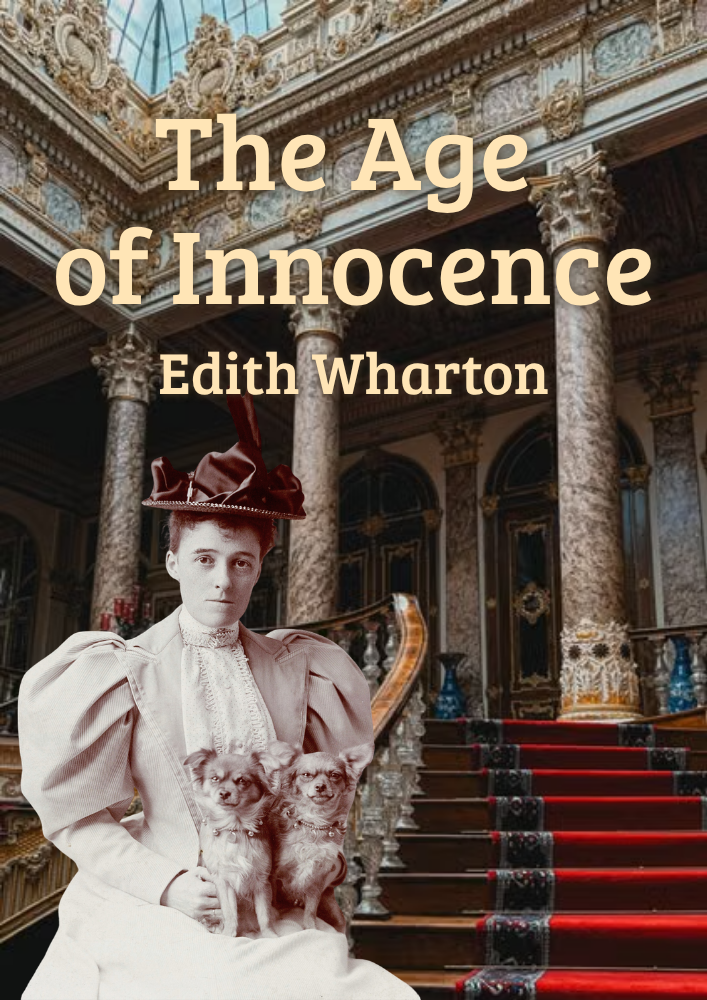
Background: New York's high society in the late nineteenth century maintained order through etiquette, marriage, and reputation. Wharton looks back at that exquisite but rigid world, revealing that so-called innocence was often a beautiful name for collective oppression. The emergence of "The Age of Innocence" connects themes such as Edith Wharton, New York high society, marriage, the Pulitzer Prize, class, and love. It does not treat the era as a decorative backdrop; instead, it allows social changes, class pressure, post-war spirit, and the sense of a modern city to permeate the characters' tones, choices, and silences. Readers can thus understand why this work resonated in its era and see the cultural issues it addresses.
Synopsis: Newland Archer is set to marry May Welland, but finds himself drawn to the unconventional Countess Ellen Olenska, who has returned from abroad. He wavers between passion, duty, family expectations, and social discipline, eventually seeing how individual desires are quietly silenced by the system of propriety. As the story progresses, "The Age of Innocence" relies not only on plot twists but also on character relationships, shifts in perspective, and the accumulation of scenes to build tension. Readers follow the main characters through dilemmas of love, travel, family, social life, or spiritual exploration, gradually seeing how surface order is tugged by desire, memory, duty, and misunderstanding. Core plots are preserved here, while avoiding early disclosure of the most critical final impact.
Literary Features: Readers can learn to read the power dynamics behind politeness and understand how Wharton uses delicate irony to describe a class-based society. This is a novel about love, but even more so, a novel about not daring to live. Regarding its literary features, what is noteworthy about "The Age of Innocence" is not its abstract "classic" status, but how it uses narrative rhythm, symbolic imagery, character voices, and structural arrangements to make loneliness, disillusionment, or spiritual crises a tangible reading experience. It is also suitable for reading alongside other Modernist, Jazz Age, and post-war literary works to observe how different authors deal with the individual in a fragmented era.
Encyclopedia
Author's Life: Edith Wharton (1862–1937) was an American novelist, short story writer, and design critic, and the first woman to win the Pulitzer Prize for Fiction. Born into high society, she used a keen and calm touch to expose the etiquette, class pressure, and gender restrictions of New York and European social circles. Wharton's novels often test love within the framework of institutions and reputation, allowing readers to see the suppression, sacrifice, and moral complexity beneath an elegant exterior. Her work belongs not only to the entries of great masters in literary history but is also frequently re-read in university courses, book clubs, and cross-cultural discussions; the narrative forms, character psychology, and observations of the era in her works still provide an effective entry point for understanding modern life.
Relationship Between Author and Work: The reason Edith Wharton was able to write "The Age of Innocence" is closely related to her era, creative concerns, and literary ambitions. This work concentrates the issues that the author long focused on—Edith Wharton, New York high society, marriage, the Pulitzer Prize, class, and love—and transforms them into a readable experience through specific characters and narrative forms. It is not a simple projection of the author's life, but the result of the author's combination of personal observation, era-specific pressure, and formal experimentation. Therefore, when reading this book, it is best to pay attention to both the author's life background and how the text reforges that background into literary form.
Miva: the next reading experience beyond audiobooks
Listen like an audiobook, then ask anything, anytime.
Start Miva's narrationMiva does not just narrate. It keeps explaining based on what you ask.