Work Guide
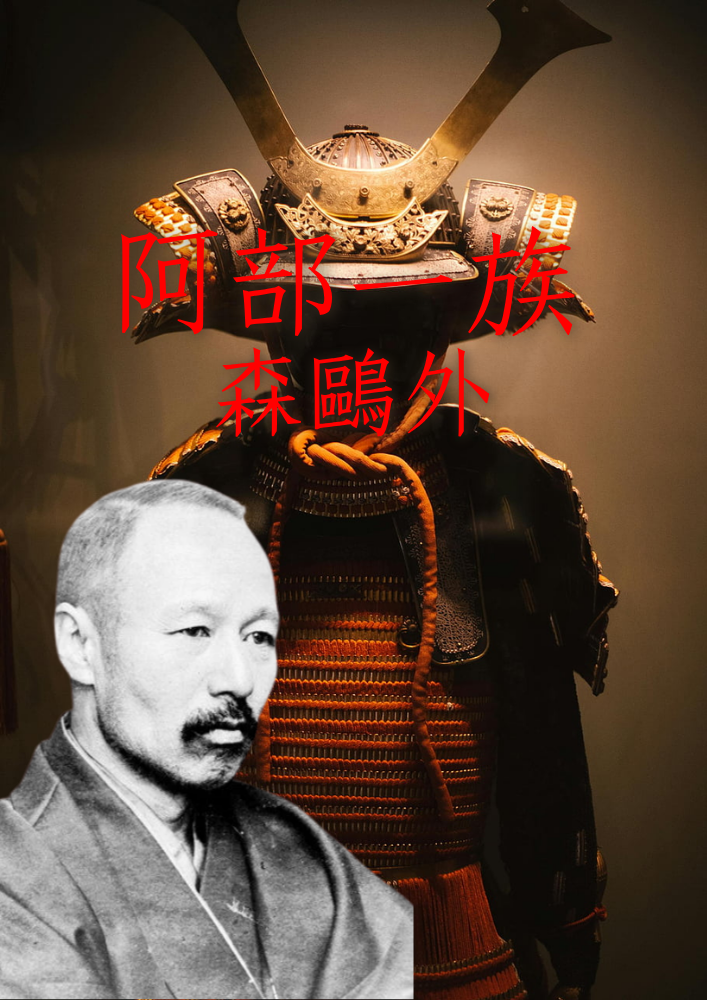
Background:'The Abe Family' (Abe Ichizoku) is a historical novel published in 1913, based on the incident of ritual suicide (junshi) and the subsequent fate of the Abe clan following the death of Hosokawa Tadatoshi, the lord of the Higo Kumamoto Domain. In an era when modern Japan was reinterpreting loyalty and martyrdom, Mori Ōgai used a detached narrative style based on historical documents to depict the process in which feudal systems and individual honor collide. Published the year after the suicide of General Nogi Maresuke sparked social debate, the work held significant meaning for contemporary readers. Through this past incident, Ōgai examined the power that judges loyalty and the logic of the 'house' (ie) that is forced to follow those judgments.
Synopsis:Upon the death of their lord, vassals seek permission to commit ritual suicide, but Abe Yaichiemon is left behind without receiving authorization. His eventual choice and the subsequent measures taken by the domain against his family broaden into a tragedy surrounding the standards of loyalty and the survival of the clan. The tragedy does not end with Yaichiemon's individual decision but chains into the relationship between his sons and the domain organization. Readers observe the contradiction where the criteria for an honorable act depend not on the individual's will, but on institutional recognition.
Literary Characteristics:The author does not excessively explain the characters' inner thoughts; instead, he demonstrates pressure through the accumulation of family rank, precedent, ritual, orders, and punishments. The concise, documentary-like style highlights a structure where the tragedy is born not from any single person's malice, but from the system as a whole. The contrast between the first half, which details the ritual suicides of various vassals, and the second half, which converges on the ruin of the Abe family, is also significant. The enumeration of proper nouns and procedures suggestive of records does not exclude emotion, but rather creates a situation where emotion is suppressed by the language of the system. By not dividing characters into simple heroes or villains, the evaluation of loyalty is left to the reader.
Film and TV Adaptations
The Abe Family (1938)
A Japanese film directed by Hisatora Kumagai, starring Chojuro Kawarasaki and Shizue Yamagishi. A representative pre-war adaptation, it organizes character relationships as a group drama and replaces historical narration with scenes showing the conflict between the family and the domain.
The Abe Family (1995)
A Japanese TV movie directed by Kinji Fukasaku, starring Tsutomu Yamazaki, Koichi Sato, and Hiroyuki Sanada. While maintaining the original's institutional criticism, it brings the conflicts and emotions of the main characters to the forefront as a visual drama, depicting the choices of individual samurai more dramatically.
In film versions, central characters of the conflict are often streamlined to fit a large cast and long timeline into a limited runtime. While visual expressions and ritual spaces are added, the documentary-like distance of the original tends to weaken.
Editions and Translations
The text is the original Japanese and is not a translation. Depending on the edition, the use of old or new kanji characters, the spelling of historical names, and the presence of annotations may vary. Although based on historical facts, the literary text and historical documents are not identical; when choosing an annotated version, one must check the base text and editorial policy.
Complete works or critical editions that note sources, original publication details, and differences from historical facts are useful for research. New character editions for the general public are easier to read, but annotations explaining the samurai system and ritual suicide procedures make it easier to follow the cause-and-effect relationships.
Author and Work
Relationship between Author and Work:This work is a key piece from the period when Ōgai shifted his focus from contemporary novels to historical fiction and biographies. It is not a simple story praising ritual suicide, but a work that shows the contradiction of how the presence of permission dictates the evaluation of loyalty, calmly depicting individuals and families besieged by organizational logic. As a work connecting the contemporary debate on junshi with Ōgai's late-period historical narratives, it holds a significant position in modern literary history. It perfects his late-period method of letting ethics emerge from the arrangement of systems and actions, rather than having characters confess their inner thoughts directly.