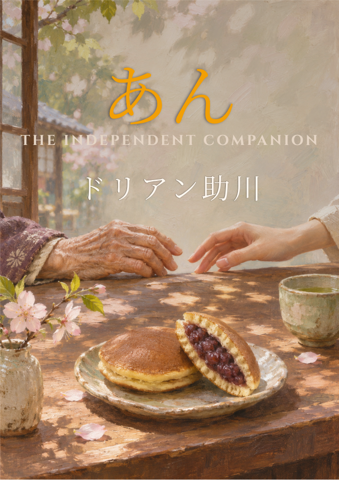
Sentaro, a man working at a dorayaki shop while burdened by his past, meets Tokue, an elderly woman with gnarled fingers. The sweet bean paste (an) she brews is incredibly fragrant, and her work ethic—listening to the "voices of the beans"—quietly transforms Sentaro's routine of near-despair.
Following the flow of all twenty-nine chapters, this guide organizes the mentor-student relationship between Sentaro and Tokue, the sense of belonging sought by the junior high student Wakana, and the process by which the history of leprosy (Hansen’s disease) isolation policies intrudes into daily life. Without spoiling the ending, it deciphers social backgrounds that cannot be fully captured by culinary fiction or simple healing stories alone. This book is not the original text, but an independent chapter-by-chapter summary guide for organizing and reviewing your reading.
Tokue's bean-making teaches Sentaro an attitude of waiting for the other party's time rather than rushing to conclusions, more so than mere culinary technique. This is why the reactions of the customers and the shop owner upon learning of her past are so heavy. While depicting prejudices that do not disappear with deliciousness or goodwill alone, it is a story of a person whose voice was stolen speaking back to the world through work and letters.
Connect the confectionery process of the twenty-nine chapters, changes in customer traffic, Wakana's family circumstances, and the visit to Tenshoen, while separating the facts of the disease, institutional isolation, and rumors that persist to this day. It follows what Tokue herself desires and passes on to the next generation, rather than making her a character who exists solely to save the protagonist.
Tokue's work—washing the beans, waiting, and checking the aroma and temperature—is an act of respecting the other's time rather than efficiency. Follow the change in Sentaro as he learns not just the procedure but the mindset.
Even though Tokue is already cured, society confines her to the framework of an "ex-patient." By linking rumors, the shop's decisions, and the history of the sanatorium, we examine the mechanism by which discrimination remains in daily life long after institutional policies end.
Sentaro's labor, which was solely for debt repayment, transforms into a craft that responds to others through his encounters with Tokue and Wakana. The focus is not on success, but on the process of reconnecting with the world.
This guide is suitable for readers interested in culinary fiction, quiet human dramas, and the history of Hansen's disease. It is also helpful for viewers of the film adaptation who wish to reconfirm the original's letters, seasons, and Sentaro's inner thoughts.
About this edition: This is not the original text, but an independent chapter guide and summary. It is intended for review and reading support and is recommended to be read alongside the original work.
Miva: the next reading experience beyond audiobooks
Listen like an audiobook, then ask anything, anytime.
Start Miva's narrationMiva does not just narrate. It keeps explaining based on what you ask.