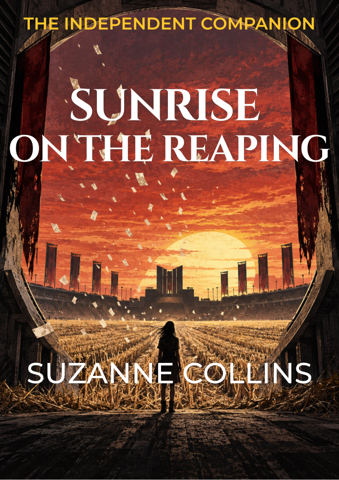
Sunrise on the Reaping by Suzanne Collins returns to Panem on the morning when twice the usual number of children will be taken for the Fiftieth Hunger Games. Haymitch Abernathy wants only to survive the day and stay with the girl he loves; instead, he is chosen for an arena designed to turn resistance into entertainment.
This independent Hunger Games prequel guide follows the novel’s three parts and twenty-seven chapters. It separates what Haymitch experiences from what the Capitol broadcasts, tracking alliances, performance, punishment, edited memory, and the early acts of defiance that echo into the original trilogy.
The Quarter Quell doubles the number of tributes taken from every district. Haymitch wants only to survive Reaping Day and return to the girl he loves, but his name is called and he is sent from District 12 with three other tributes. The Games are structured to make resistance appear impossible. As Haymitch recognizes that he has been prepared to fail, staying alive, protecting other people, and making defiance echo beyond the arena become increasingly difficult to separate.
The guide distinguishes the events characters experience from the version the Capitol produces for viewers. It tracks cameras, performance, editing, punishment, alliances, and testimony across the pre-arena, arena, and aftermath sections. Readers can connect Haymitch's younger self to his later role in the trilogy without treating a known future as the only reason his present choices matter.
The Capitol controls not only death but which deaths audiences are allowed to see and how they are explained. The distance between private memory and the broadcast record determines who can be mourned and what resistance survives.
The people Haymitch wants to protect can be turned into leverage against him. The novel shows how authoritarian power converts emotional attachment into a tool of discipline.
One brave act may not overthrow a system, but it can leave behind strategies, language, and memory that later people recognize and continue.
For Hunger Games readers, fans of dystopian and young adult fiction, and readers interested in propaganda, media manipulation, war trauma, and collective memory. The story can be followed as a prequel, but familiarity with Haymitch and the original trilogy adds historical resonance. Content includes institutional violence, the deaths of young people, coercion, grief, and trauma.
Edition notice: This is an independent chapter guide and summary, not the original book. It is designed for review and reading support and is best used alongside the full work.
Miva: the next reading experience beyond audiobooks
Listen like an audiobook, then ask anything, anytime.
Start Miva's narrationMiva does not just narrate. It keeps explaining based on what you ask.