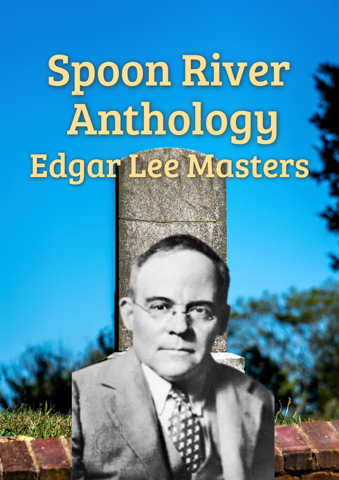
Background:
Published in book form in 1915 after magazine appearance, Masters's sequence imagines a Midwestern cemetery speaking through the dead. The form draws on the Greek Anthology while turning local respectability, law, medicine, religion, business, sexuality, and political power into a network of contested testimony.
What kind of book is it?
Each poem bears a resident's name and offers a compressed account, accusation, defense, confession, or reinterpretation. Read together, the voices expose contradictions between public reputation and private experience without requiring a single narrator to adjudicate every dispute.
Literary style:
Free verse, dramatic monologue, recurring names, cross-reference, irony, and radically compressed biography create a collective novel-like effect. Arrangement matters because later speakers revise earlier claims; extracting only quotable epitaphs weakens the social design.
Director: John Newland
Production country: United States
Cast: Ed Begley, Frank Overton, Mildred Dunnock
Why it matters: A useful, identifiable screen version for comparison.
Difference from the book: television anthology adaptation selects and dramatizes only part of the book's interlocking cemetery voices.
Main editions and translations:
the selected digital edition preserves the English sequence and its ordering. Editions may differ because Masters expanded the collection, and theatrical arrangements select or reorder speakers; catalog description should state the contents of the actual file rather than assuming every anthology has the same scope.
Reading recommendation:
Editions can differ because Masters expanded the sequence, and stage versions select and rearrange speakers. Check the actual contents and order. A selection cannot support close study of the contradictions that arise when later epitaphs answer earlier ones.
Cultural significance:
The book became especially adaptable to staged recitation, radio, and community performance because each voice is brief yet connected to others. It remains useful for readers interested in unreliable testimony, local history, social hypocrisy, and the boundary between poetry and fiction.
Place in the author's writing:
Masters's legal work and Midwestern experience inform the book's attention to testimony, reputation, and conflicting accounts, but the achievement is formal rather than documentary. By arranging epitaphs as a speaking network, he created a collective portrait unlike his later biographies and conventional verse, and the form became his most durable contribution to American poetry and performance.
Miva: the next reading experience beyond audiobooks
Listen like an audiobook, then ask anything, anytime.
Start Miva's narrationMiva does not just narrate. It keeps explaining based on what you ask.