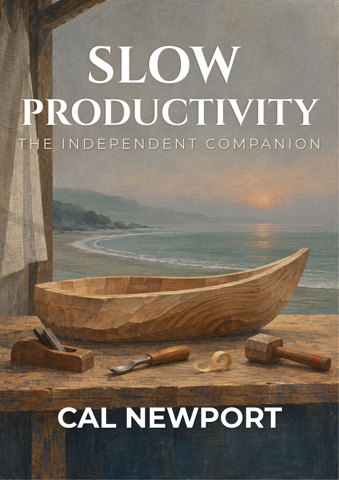
Knowledge work is often measured by visible motion: messages answered, meetings attended, and tasks kept in circulation. Cal Newport argues that this pseudo-productivity creates overload while making the work people most value harder to finish.
New York Times Bestseller.
Newport identifies pseudo-productivity as the use of visible activity to stand in for harder-to-measure value. His alternative has three parts: limit simultaneous obligations, allow work to unfold at a variable and natural pace, and invest deeply in quality. Historical writers, scientists, and artists provide examples, while contemporary workplace cases show why individual time management cannot fully solve systems built around constant accessibility.
Doing fewer things is a structural choice about workload and sequencing, not a promise to complete the same impossible list with better focus.
The guide traces seasonality, variation, and longer horizons, helping readers separate productive intensity from permanent urgency.
Craft can justify greater autonomy and attention, but perfectionism can also stall action. The chapter map preserves the book’s balance between ambition and sustainability.
Readers can use the chapter sequence to audit workload at two levels: the personal project list and the organizational processes that keep adding coordination. The book is most interesting where its principles conflict—quality can justify patience but also feed perfectionism; reduced commitments can improve output but require authority, negotiation, or institutional change.
Knowledge workers, managers, academics, and independent creators facing chronic overload are the core audience. The approach is deliberately slower than a list of hacks and is most credible when readers examine which constraints they can change and which require collective action.
Edition notice: This is an independent chapter guide and summary, not the original book. It is designed for review and reading support and is best used alongside the full work.
Miva: the next reading experience beyond audiobooks
Listen like an audiobook, then ask anything, anytime.
Start Miva's narrationMiva does not just narrate. It keeps explaining based on what you ask.