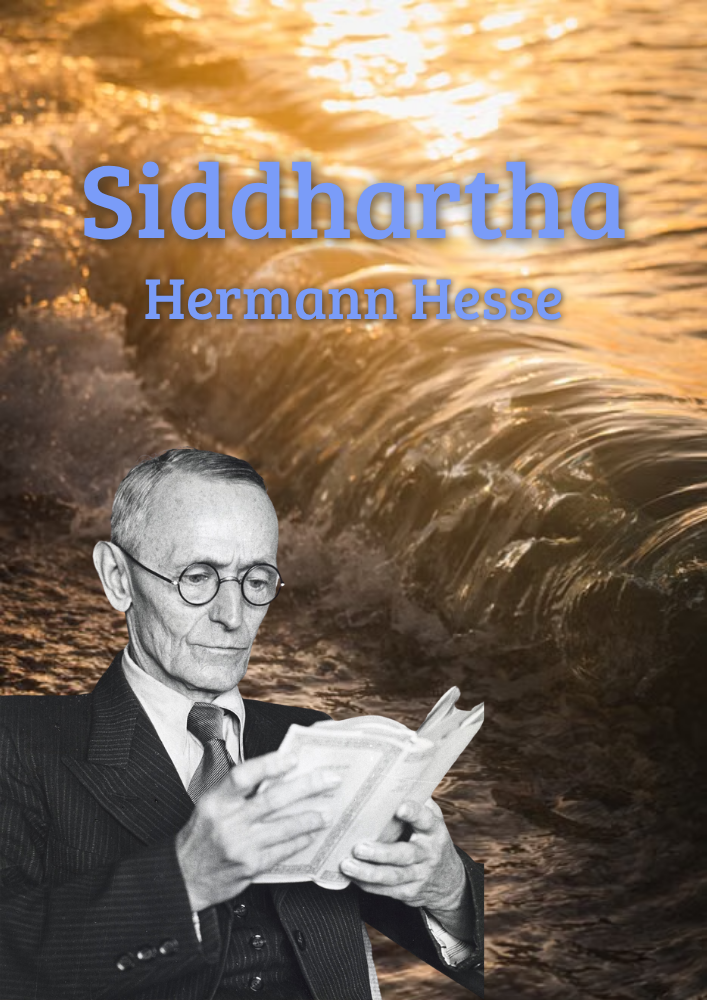
Background: Following World War I, the spiritual crisis in Europe deepened, leading many writers to turn toward Eastern thought, mysticism, and internal cultivation to find a way out. Through the setting of ancient India, Hesse actually writes about the modern individual's quest for self and meaning. The emergence of "Siddhartha" connects themes of Hermann Hesse, spiritual seeking, India, enlightenment, philosophical fiction, and growth. Rather than using the era as mere decoration, it allows social change, class pressure, post-war spirit, and the sense of modern urbanity to permeate the characters' tones, choices, and silences. Consequently, readers can understand why this work resonated in its time and see the cultural questions it addresses.
Synopsis: Siddhartha, a young Brahmin, leaves home to seek the Way, experiencing Samana asceticism, the teachings of the Buddha, secular passion, commercial life, and meditation by the river. He is not satisfied with accepting ready-made dogmas; he insists on personally experiencing suffering, lostness, and enlightenment through his own life. As the story progresses, "Siddhartha" relies not only on plot twists but also on character relationships, shifts in perspective, and the accumulation of scenes to create tension. Readers follow the protagonist through the dilemmas of romance, travel, family, social interaction, or spiritual exploration, gradually seeing how surface order is moved by desire, memory, responsibility, and misunderstanding. This overview preserves the core plot while avoiding premature disclosure of the most critical ending impact.
Literary Features: Readers can reflect on the difference between knowledge and wisdom and see that spiritual practice is not about escaping the world, but about listening to life anew after passing through it. It is suitable for readers searching for direction who do not wish to be pacified by standard answers. Regarding its literary features, what is noteworthy is not an abstract "classic" status, but how it utilizes narrative rhythm, symbolic imagery, character voices, and structural arrangements to make loneliness, disillusionment, or spiritual crisis a tangible reading experience. It is also suitable for reading alongside other modernist, Jazz Age, and post-war literary works to observe how different writers handle the individual within a fractured era.
Encyclopedia
Author Biography: Hermann Hesse (1877-1962) was a German novelist and poet who was awarded the Nobel Prize in Literature in 1946. His works were deeply influenced by Romanticism, psychoanalysis, Eastern thought, and personal spiritual practice, often depicting the protagonist's long pursuit between social norms, internal division, and self-actualization. Hesse has a particular appeal for young readers because he does not view confusion as a flaw, but writes it as a necessary journey toward maturity, compassion, and freedom. His creation does not only belong to the entries of famous names in literary history but is also frequently re-read in university courses, book clubs, and cross-cultural discussions; the narrative forms, character psychology, and observations of the era in his works still provide an effective entry point for understanding modern life.
Relationship between Author and Work: The reason Hermann Hesse was able to write "Siddhartha" is closely related to his era, creative concerns, and literary ambitions. This work concentrates the author's long-standing interests in Hermann Hesse, spiritual seeking, India, enlightenment, philosophical fiction, and growth, transforming them into readable experiences through specific characters and narrative forms. It is not a simple projection of the author's life, but a result of the author combining personal observation, the pressures of the era, and formal experimentation. Therefore, when reading this book, it is best to pay attention to both the author's life background and how the text re-forges that background into literary form.
Miva: the next reading experience beyond audiobooks
Listen like an audiobook, then ask anything, anytime.
Start Miva's narrationMiva does not just narrate. It keeps explaining based on what you ask.