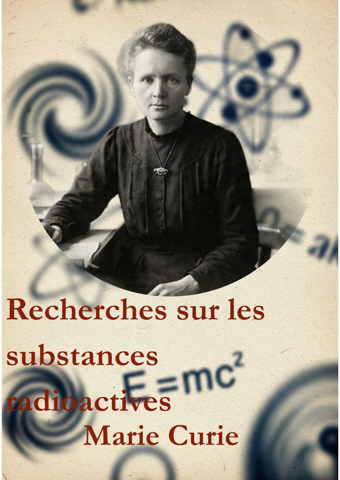
"Research on Radioactive Substances" is Marie Curie's doctoral thesis, published at the end of the 19th century. This fundamental work presents Curie's extensive research on radioactivity, initiated following the discovery of uranic rays by Henri Becquerel. The text details her research on uranium and the revolutionary discovery of two new highly radioactive elements: polonium and radium, conducted in collaboration with her husband, Pierre Curie. The work describes the experimental methodologies used to isolate and characterize these substances, as well as the properties of the radiation they emit. Intended for a scientific audience, this work not only laid the foundations for radiology and nuclear physics but also earned Marie and Pierre Curie the Nobel Prize in Physics in 1903, recognizing their major contribution to the understanding of radioactive phenomena.
Reading ease score: 58.0 (10th to 12th grade). Somewhat difficult to read.
Miva: the next reading experience beyond audiobooks
Listen like an audiobook, then ask anything, anytime.
Start Miva's narrationMiva does not just narrate. It keeps explaining based on what you ask.