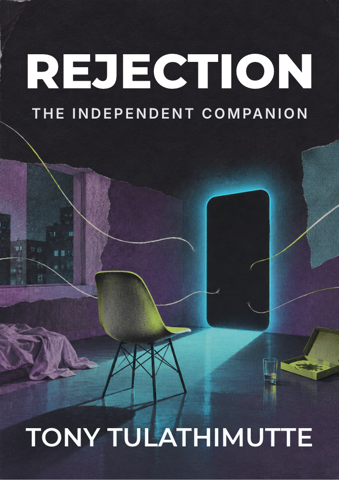
The people in Rejection want intimacy, recognition, and moral certainty—but the internet gives them better tools for performance, grievance, and self-deception. Across seven connected stories, private humiliation mutates into public identity with comic and often brutal consequences.
2024 National Book Award for Fiction — Longlisted
Tony Tulathimutte uses changing forms, voices, and digital language to connect characters who misunderstand both themselves and one another.
The seven stories connect through more than recurring characters. They share habits of self-justification: people translate rejection into a political identity, a theory of gender, an online persona, or a verdict against everyone who has refused them. Form changes with the speaker, moving among conventional narration, messages, platform language, and commentary that tries to seize control of interpretation. Readers must continually ask who frames the scene, who has been cropped out, and what an audience rewards. Tulathimutte's satire is most unsettling when it removes the reader's safe distance. Watching, reposting, diagnosing, and enjoying moral superiority can become part of the same economy of humiliation the stories expose, even when the observer believes they stand outside it.
Humor is central to that discomfort. The stories exaggerate, escalate, and exploit timing with extraordinary control, yet the laughter often catches on a recognizable need for affection or status. This double response prevents satire from becoming a catalogue of monsters. The characters' worst ideas grow out of ordinary vulnerabilities, even when their actions become indefensible, and that proximity is what makes the collection hard to dismiss.
See how romantic or social refusal becomes a story characters use to explain everything that follows.
Notice how posts, chats, jargon, and imagined audiences reshape narration rather than merely decorating it.
Track how the book shifts sympathy and discomfort, refusing to let either characters or readers occupy a clean moral position.
For readers of formally adventurous fiction, dark social satire, and internet-age relationship stories. Content includes misogyny, racism, sexual material, self-harm, and extremist rhetoric.
This is an independent chapter guide and summary, not the original book. It is designed for review and reading support and is best used alongside the full work.
Miva: the next reading experience beyond audiobooks
Listen like an audiobook, then ask anything, anytime.
Start Miva's narrationMiva does not just narrate. It keeps explaining based on what you ask.