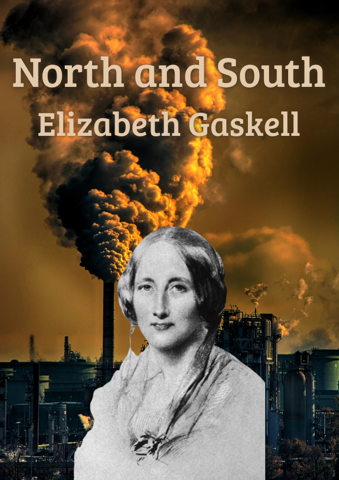
Historical background:
Gaskell published the novel in Household Words in 1854–1855 and revised it for book form. Moving its heroine from a southern clerical household to an industrial northern town lets religious dissent, factory discipline, labor organization, and class perception meet inside domestic and public scenes.
Story introduction:
A family's relocation forces encounters with manufacturers and workers whose conflicts cannot be understood through inherited manners alone. The introduction avoids turning this social education into only a romance, because strikes, illness, food, housing, and speech are structural to the book.
Literary form:
Gaskell uses free indirect discourse, debate, regional contrast, and carefully staged misunderstandings. Multiple viewpoints complicate easy moral sorting: neither paternal industrialism nor nostalgic gentility is allowed to remain an adequate explanation.
Central themes:
A family's relocation forces encounters with manufacturers and workers whose conflicts cannot be understood through inherited manners alone. The introduction avoids turning this social education into only a romance, because strikes, illness, food, housing, and speech are structural to the book. Beyond that immediate situation, North and South examines industrial novel, class, labor, romance, Victorian Britain, Manchester. The novel develops concerns Gaskell had explored in Mary Barton while revising the balance between social conflict and mutual recognition. Its BBC afterlife brought new readers, but the book's distinctive achievement is the sustained argument among households, workplaces, and classes. Together, these concerns give the conflict its moral and historical weight beyond the immediate plot.
Director: Brian Percival
Production country: United Kingdom
Principal cast: Daniela Denby-Ashe, Richard Armitage, Sinéad Cusack
Why this version matters: This identifiable production provides a useful comparison between the selected text and a major screen interpretation associated with named filmmakers and performers.
Difference from the book: It introduces Margaret to Thornton amid mill violence, a first meeting staged differently from the novel. The change affects point of view, pacing, or the balance among mystery, romance, horror, and social context; viewers should therefore treat the film as an interpretation rather than a visual substitute for the novel.
Screen interpretation:
The named adaptation introduces Margaret to Thornton amid mill violence, a first meeting staged differently from the novel. For North and South, that choice changes the weight given to industrial novel, class, labor, romance, Victorian Britain, Manchester: visible action replaces some of the prose’s control over voice and delay, while the performances give particular faces and bodies to relationships that the book can keep uncertain. The screen version therefore creates a distinct emphasis rooted in this work’s specific narrative problem.
Edition history:
supplies the complete English novel in 52 chapters. Readers should distinguish it from John Jakes's American Civil War novel of the same title and note that serialization and book versions differ; annotated editions are valuable for industrial and dissenting contexts. Complete English novel; title and metadata distinguish it from later American works with the same name. The history of North and South is especially sensitive to its 52 chapters, because abridgment or revision can alter the balance among industrial novel, class, labor, romance, Victorian Britain, Manchester.
Translation history:
North and South was written in en; this record uses the original-language text rather than a translation. Translations must recreate the book’s treatment of industrial novel, class, labor, romance, Victorian Britain, Manchester, including differences of register, dialogue, and historically specific vocabulary that shape Elizabeth Gaskell’s effects.
Place in literary history:
The novel develops concerns Gaskell had explored in Mary Barton while revising the balance between social conflict and mutual recognition. Its BBC afterlife brought new readers, but the book's distinctive achievement is the sustained argument among households, workplaces, and classes.
Place in the author's career:
The novel develops concerns Gaskell had explored in Mary Barton while revising the balance between social conflict and mutual recognition. Its BBC afterlife brought new readers, but the book's distinctive achievement is the sustained argument among households, workplaces, and classes. Within Elizabeth Gaskell’s career, North and South is distinguished by an English social novel that connects industrial conflict, regional difference, class, religion, and courtship through a move from southern England to a manufacturing town. It gathers the author’s concerns into a structure where industrial novel, class, labor, romance, Victorian Britain, Manchester interact instead of standing as separate messages.
Continuing influence:
North and South continues to influence later storytelling through its handling of industrial novel, class, labor, romance, Victorian Britain, Manchester. The novel develops concerns Gaskell had explored in Mary Barton while revising the balance between social conflict and mutual recognition. Its BBC afterlife brought new readers, but the book's distinctive achievement is the sustained argument among households, workplaces, and classes. Its afterlife shows how a historically specific work can generate new interpretations while the original retains complications that simplified cultural versions leave aside.
Miva: the next reading experience beyond audiobooks
Listen like an audiobook, then ask anything, anytime.
Start Miva's narrationMiva does not just narrate. It keeps explaining based on what you ask.