Work Guide
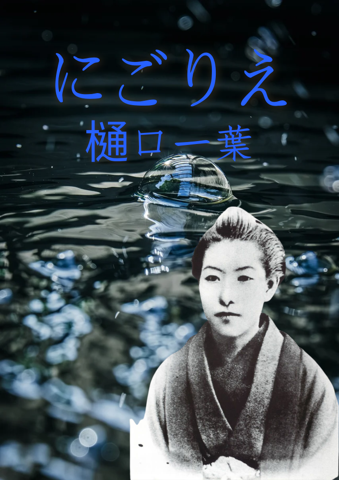
Background: Nigorie depicts the life of Oriki, a barmaid at a sake house, as she maneuvers between customers, colleagues, an old lover, and memories of poverty. Meiji-era Tokyo, where the story is set, seems lively with greetings, jokes, the smell of alcohol, and social interactions, but Oriki's situation is actually quite dire. She must rely on her beauty, wit, and smiles to make a living while facing the possession, resentment, and helplessness inherent in her emotional relationships. The title 'Nigorie' (Troubled Waters or Muddy Creek) accurately hints at the atmosphere: the characters are not standing on a clear shore choosing their lives, but are already struggling within a murky current.
Literary Features: Higuchi's brilliance lies in her ability to write the full weight of a life within the constraints of a short story. The opening is filled with sound—Oriki greeting customers and joking with colleagues—allowing the reader to first see her extroverted, capable, and sharp side. However, as the plot deepens, her smile slowly cracks, revealing childhood poverty, family scars, and despair over any way out. The work does not simplify Oriki into a mere victim; she has pride, tactics, and a desire for a better life, but the space society leaves for her is too narrow.
Introduction: This work is well-suited for a reading through the lens of 'emotional labor.' Many people must appear friendly, humorous, and reliable in their work, yet few see the exhaustion behind it. Nigorie helps readers understand that those who joke are not necessarily without pain, and those best at handling social scenes may find it hardest to truly ask for help. It is also a classic short story about how women, poverty, and social stigma become entangled.
Oriki moves between customers and companions at the shop, appearing cheerful and brash, knowing how to command the room with her words; but the work slowly reveals that her pride and pain are equally intense. The family of her former lover, Genshichi, has collapsed because of her, and Genshichi's wife and child, the customer Asanosuke, and the other women at the shop all pull Oriki's life in different directions under their various gazes. She wishes to escape poverty and her lowly status, yet realizes her situation is difficult to overturn. In a short space, the novel writes of how a woman is trapped by a combination of adoration, hatred, sympathy, and money. Such a story can be entered without profound literary knowledge; by following the characters' choices, hesitations, and silences, one can feel the work slowly pushing a human condition before one's eyes.
Work Encyclopedia
Author's Life: Ichiyō Higuchi studied waka poetry in her early years before turning to fiction. She once ran a small shop and personally experienced economic pressure and the highs and lows of human nature, which allowed her work to capture the authentic voice of life at the bottom of society.
Relationship between Author and Work: Nigorie crystallizes Ichiyō's profound understanding of the situation of lower-class women. She does not look down on her characters with an external critical stance but allows them to shine through their language, gestures, and silence.
Modern Analogy: Like a monologue one only dares to speak late at night after getting off work: skillfully greeting everyone during the day, and only admitting at night that one is actually about to be dragged beneath the surface by life.
Miva: the next reading experience beyond audiobooks
Listen like an audiobook, then ask anything, anytime.
Start Miva's narrationMiva does not just narrate. It keeps explaining based on what you ask.