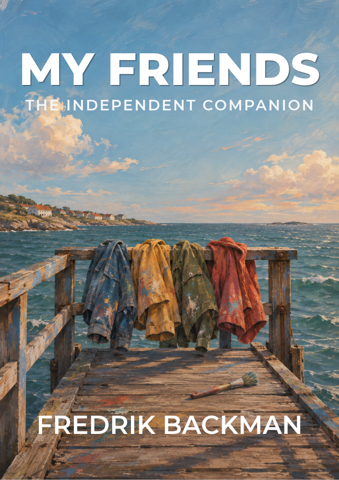
A famous painting contains three tiny figures most viewers barely notice. For Louisa, those figures open a path into the summer when four teenagers made one another survivable—and into the question of who gets remembered when art outlives its makers.
2025 Goodreads Choice Award, Best Fiction — Winner; 2026 Libby Book Award, Audiobook of the Year — Winner; #1 New York Times Bestseller
Fredrik Backman links a present-day journey with the history behind a work of art.
The painting is not a conventional mystery waiting for a single solution. It is an opening into the lives that art history often leaves at the edge of the frame. Louisa's present-day journey and the teenagers' earlier summer gradually illuminate one another, turning ownership and authorship into questions about memory: who gets credited, who is preserved, and who disappears behind a finished work. Backman often lets a joke establish intimacy before returning to the same detail under the pressure of grief. Nicknames, shared rituals, and apparently minor promises therefore matter as much as major revelations. They show friendship not as a grand declaration but as a daily practice through which neglected young people make one another visible and, sometimes, survivable.
The novel is also attentive to the ethics of telling another person's life. Each new account makes the painting more meaningful while exposing the risk of turning private suffering into an inspiring legend. Louisa must decide whether honoring the friends means possessing their story, sharing it, or accepting that some parts belong only to those who lived them. That question gives the journey its moral weight.
Track how background figures become the true center of the story and challenge conventional ideas of artistic genius.
Notice the jokes, rituals, and acts of attention through which the teenagers build safety for one another.
Follow how ownership, memory, and interpretation change as the painting travels beyond its original moment.
For readers who enjoy emotional ensemble fiction, found family, art mysteries without a crime plot, and stories that balance grief with humor.
This is an independent chapter guide and summary, not the original book. It is designed for review and reading support and is best used alongside the full work.
Miva: the next reading experience beyond audiobooks
Listen like an audiobook, then ask anything, anytime.
Start Miva's narrationMiva does not just narrate. It keeps explaining based on what you ask.