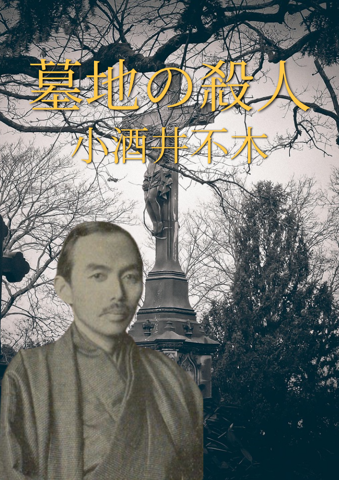
Work Background:
Told as a difficult case handled by the young scientific detective Toshio Tsukahara, it depicts the reasoning surrounding an unidentified body found in a cemetery. The Aozora Bunko work card records the first appearance as "Kodomo no Kagaku (Children's Science) Vol. 7, Nos. 1-6," July–December 1928 (Showa 3).
Synopsis:
A murder is discovered in the terrifying setting of a cemetery, but Toshio is not swayed by the atmosphere; he isolates the condition of the corpse, the layout of the scene, and the chronological relationships. As questions pile up regarding the victim's identity and the location of the crime, a structure emerges that is more than a simple cemetery crime. Why was the body in the cemetery, and why does it appear the victim went there of their own volition? Behind the eeriness of the location lies a calculated induction.
Literary Characteristics:
The work contrasts a ghost-story-like setting with a rational solution, transforming the reader's fear into an observational puzzle. It declares the difficulty of the case at the beginning and features an explanatory nature typical of a serialized work, organizing multiple questions in sequence.
Key Elements:
Using "cemetery, unidentified corpse, and authentic mystery" as entry points, the story tracks the moment objects and locations turn into evidence and where the first impression of the title shifts.
Reading Guide:
Following how the initial information is rearranged through explanation, dialogue, and scene transitions makes it easy to see the omissions and structure of the short story. One should also check the pace of the writing using the rubi (glosses) and paragraph breaks as clues.
Currently, no visual adaptations are recorded.
The included text is the Japanese XHTML version published by Aozora Bunko. The source text on the work card is recorded as "Fuboku Kozakai Detective Fiction Selection [Ronso Mystery Library 8]" published by Ronso-sha. This edition, which preserves rubi, paragraphs, and kana usage, is suitable for examining the style unique to this work, which contrasts a ghost-story-like setting with a rational solution. The effectiveness of the introduction—where a murder is found in a cemetery but Toshio isolates the corpse's state and scene layout—is best conveyed through a text that maintains the original paragraph breaks and narrative tone. Since the original magazine appearance and the later source text are different materials, it is best to read between the work card and the text without confusing the publication dates. As far as can be confirmed, there is no translated version with consistent translator, publisher, publication year, and complete/abridged status; when choosing an edition in another language, priority should be given to those that clearly state the translator and source text.
Fuboku's method of dismantling the occult with scientific knowledge is presented in a clear narrative for a young audience. This piece emphasizes the path of reasoning—what is adopted as evidence—rather than the characterization of Toshio Tsukahara. It depicts the reasoning surrounding an unidentified body found in a cemetery. The method used here—contrasting an eerie setting with a rational solution—serves as a clue to distinguish how the author handles the same subject matter in different works. When comparing it to other works by the same author, focusing on the narrator's range of knowledge, the method of delaying explanations, and the distance between reality and fantasy clarifies the unique position of "Murder at the Cemetery."
Miva: the next reading experience beyond audiobooks
Listen like an audiobook, then ask anything, anytime.
Start Miva's narrationMiva does not just narrate. It keeps explaining based on what you ask.