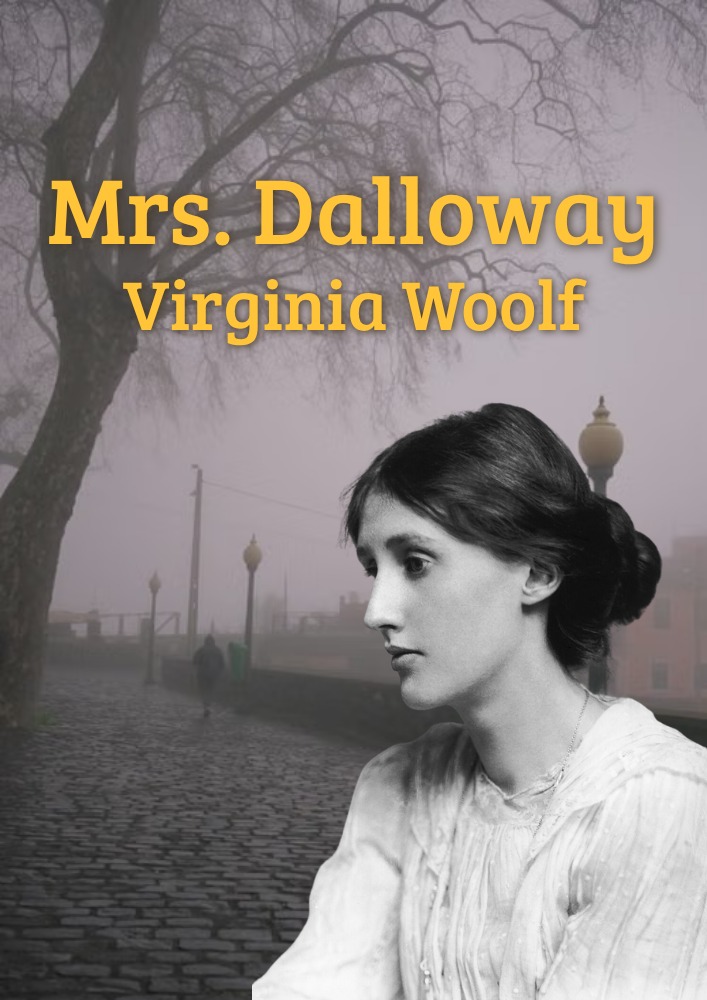
Background: Post-WWI London appears to have returned to normalcy on the surface, but trauma lurks within the chimes, streetscapes, and social etiquette. Woolf uses a single day to write the memory network of an entire city. The emergence of Mrs. Dalloway connects the threads of Woolf, stream of consciousness, post-war London, feminist literature, trauma, and modernism. It does not treat the era as a decorative backdrop but allows social changes, class pressures, post-war psyche, and the sense of a modern city to enter the characters' tones, choices, and silences. Readers can thus understand why this work resonated in its time and see the cultural issues it addresses.
Synopsis: Clarissa Dalloway prepares for a party, moving through the streets of London and past memories, while the veteran Septimus is pushed to the edge by war trauma and medical authority. Their lives do not truly meet, but they illuminate each other through the news of death. As the story progresses, Mrs. Dalloway relies not just on plot twists, but on character relationships, shifts in perspective, and the accumulation of scenes to create tension. Readers follow the main characters into dilemmas of love, travel, family, socializing, or spiritual exploration, gradually seeing how surface order is pulled by desire, memory, duty, and misunderstanding. Core plots are preserved here while avoiding premature spoilers of the critical ending.
Literary Features: Readers can experience how the stream of consciousness captures city life, class, gender, and trauma. The novel reminds us that even the most ordinary day can hold a lifetime of choices, regrets, and a sensitivity to being alive. Regarding literary features, what makes Mrs. Dalloway noteworthy is not just its abstract "classic" status, but how it utilizes narrative rhythm, symbolic imagery, character voices, and structural arrangements to make loneliness, disillusionment, or mental crisis a felt reading experience. It is also suitable for reading alongside other modernist, Jazz Age, and post-war literary works to observe how different writers handle the individual in a fractured era.
Encyclopedia
Author's Life: Virginia Woolf (1882–1941) was an English novelist, critic, and a central member of the Bloomsbury Group, as well as a key figure in the history of modernism and feminist literature. Known for her use of stream of consciousness, temporal structures, interior monologues, and sensory details, she excelled at depicting subtle yet intense psychological fluctuations in everyday life. Woolf's work focuses on the female condition, class, trauma, memory, urban experience, and artistic form, pushing the novel from external plot into the depths of consciousness, changing how readers understand character and time. Her work belongs not only to the lists of masters in literary history but is also frequently reread in university courses, book clubs, and cross-cultural discussions; the narrative forms, character psychology, and observations of the era in her work still provide a valid gateway to understanding modern life.
Relationship Between Author and Work: The reason Virginia Woolf was able to write Mrs. Dalloway is closely related to her era, creative concerns, and literary ambitions. This work concentrates long-standing interests—Woolf herself, stream of consciousness, post-war London, feminist literature, trauma, and modernism—and transforms them into a readable experience through specific characters and narrative forms. It is not a simple projection of the author's life, but the result of combining personal observation, the pressures of the times, and formal experimentation. Therefore, when reading this book, it is best to pay attention to both the author's life background and how the text reforges that background into literary form.
Film and Television Comparison (Last Decade): In the past decade, Clarissa (2026) serves as a modern reconstruction of Mrs. Dalloway, moving the story into new urban and ethnic contexts. Like the original, it focuses on party preparations within a single day, the return of memory, and the female self. The difference lies in how the film version updates Woolf's stream of consciousness through performance and urban space, while the original relies more on syntax, temporal jumps, and internal voices. This comparison helps readers distinguish the literary focus of the original and the cinematic medium's reinterpretation of rhythm, visuals, character emphasis, and contemporary issues, placing the classic within today's viewing experience.
Miva: the next reading experience beyond audiobooks
Listen like an audiobook, then ask anything, anytime.
Start Miva's narrationMiva does not just narrate. It keeps explaining based on what you ask.