Work Guide
Historical Background: The Mencius was formed during the Warring States period, an era defined by competition between feudal lords, annexation wars, and the political reality of enriching the state and strengthening the military. Against this backdrop, Mencius insisted on benevolent governance, the Kingly Way (Wangdao), and people-oriented thought, opposing the rule of the world through mere profit and hegemonic force. The text preserves a large volume of dialogues and debates between monarchs and ministers, demonstrating how Confucian thought defended moral principles under real political pressure and showcasing the vitality of the Hundred Schools of Thought. This background is not just a chronological note; it determines how the work understands power, desire, and individual choice. By grasping this historical context, readers can see the deeper cultural anxieties and value conflicts behind the narrative. This background is not just a chronological note; it determines how the work understands power, desire, and individual choice. By grasping this historical context, readers can see the deeper cultural anxieties and value conflicts behind the narrative.
Story Synopsis: The Mencius is not a continuous narrative but a series of debates, persuasions, metaphors, and dialogues between teacher and students. Facing monarchs such as King Hui of Liang and King Xuan of Qi, Mencius repeatedly discusses benevolent governance, people's livelihoods, war, education, and human nature. He persuades his counterparts with arguments such as the "heart that cannot bear to see the suffering of others," "the people are more important than the ruler," and the "original goodness of human nature," using vivid metaphors to turn abstract ethics into perceptible political judgments. The entire book is like a record of intellectual action. When reading, one can view the plots as a series of tests: how characters face misjudgments, temptations, loss, or desire is often more important than the events themselves. The progression of the story ensures the classic is no longer distant from modern experience but returns to the reader's own judgment.
Literary Features: The prose of the Mencius is full of momentum, making excellent use of parallelism, rhetorical questions, metaphors, and layered questioning. It is not just a collection of philosophical propositions but a highly performative literature of debate. Mencius often pushes the opponent's utilitarian logic to its limit before using moral intuition to turn the tide. The text possesses both theoretical depth and colloquial power, making benevolence and righteousness not just abstract values but linguistic weapons that can be deployed in political settings. Its aesthetic appeal lies not only in the plot or language but in how it transforms thought into perceptible scenes and character actions. The twists, contrasts, symbols, and tonal shifts within the work provide layers for re-reading that go beyond mere genre entertainment.
Work Encyclopedia
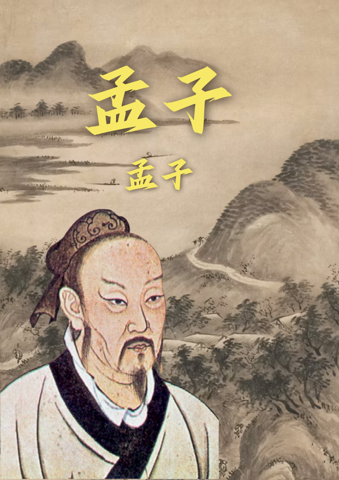
Author's Life: Mencius, named Meng Ke, was a native of Zou during the Warring States period and was later revered as the "Second Sage." He inherited the teachings of Confucius and traveled through various states, attempting to persuade monarchs to implement benevolent governance, though success was difficult in an era that prioritized military might and political intrigue. His thoughts were compiled into a book by his disciples and later followers, becoming one of the Confucian classics. The image of Mencius's life is that of a thinker and orator who insisted on the possibility of moral politics in a chaotic world. Understanding the author's life helps identify recurring themes: power, faith, identity, displacement, frustration, or the obsession with beauty. These life experiences are not the sole interpretation of the work, but they provide a solid entry point for reading.
Relationship between Author and Work: The Mencius preserves not private lyricism but a live performance of Mencius's intellectual personality. His strong moral confidence, eloquence, and sense of reality are visible throughout the book. He did not evade politics; he entered the core of politics to question monarchs: Is governance based on the people? Consequently, the work is closely linked to the author; Mencius's theory of the goodness of human nature, his "vast, flowing qi," and his Kingly Way philosophy are all presented through dialogue as a practical public ethic. Therefore, while reading this book, one can observe how the author's intellectual concerns are transformed into characters, plots, and narrative rhythms. The work does not simply explain the author's position; it allows these positions to endure testing within the stories, which is why classics can engage in cross-generational dialogue."
Miva: the next reading experience beyond audiobooks
Listen like an audiobook, then ask anything, anytime.
Start Miva's narrationMiva does not just narrate. It keeps explaining based on what you ask.