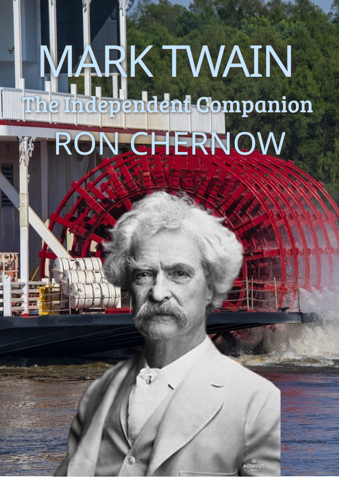
What this collection explores:
This National Book Festival conversation examines how Ron Chernow reconstructed the public legend and private contradictions of Mark Twain. Drawing attention to archives, letters, and unpublished material, Chernow explains how Samuel Clemens cultivated a performative identity while navigating family life, financial risk, politics, race, fame, and literary work.
What readers will find:
Readers will hear about Chernow's research decisions, his method of shaping a long biography, and the challenge of writing about a subject who constantly created his own mythology. The discussion places Twain's humor, debts, grief, public positions, and literary innovation inside broad American change.
Who it is for:
It is suited to readers of Mark Twain, American literature and history, biography, archival research, and long-form narrative nonfiction.
Source: Library of Congress National Book Festival / WETA / PBS. Chernow discusses the research and narrative method behind his biography, moving through Twain's family, finances, politics, race, public persona, and writing career.
The person and the public mask:
Chernow distinguishes Samuel Clemens from the Mark Twain stage identity and compares self-presentation with what surviving documents reveal.
Archives and biographical judgment:
He explains how letters, manuscripts, and family materials are selected, compared, and turned into a readable chronological narrative.
An American writer in contradiction:
Race, politics, speculation, family dependence, and literary innovation are held together without reducing Twain to a hero or villain.
Speaking to a festival audience, Chernow uses stories of research and contradiction to explain a very large biography. He describes his attraction to Twain's voice while addressing difficult questions about race, family, money, and moral judgment, making the biographer's decision-making part of the event.
Read the single long conversation in order, beginning with Chernow's choice of subject and continuing through archives, family, finance, politics, and race. The transcript supplies reasons for selection and spoken elaboration; the biography supplies the full chronology, notes, and documentary evidence.
Grounding Statement:
This content is based on the listed event transcripts. It presents the ideas discussed in those conversations and does not represent the complete contents of the original book.
Miva: the next reading experience beyond audiobooks
Listen like an audiobook, then ask anything, anytime.
Start Miva's narrationMiva does not just narrate. It keeps explaining based on what you ask.