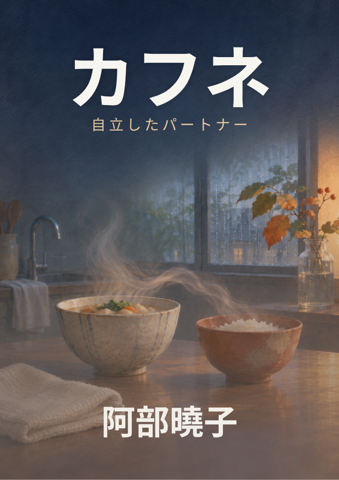
Kaoruko, who suddenly loses her beloved younger brother, meets Setsuna, her brother's former lover, through his will. In the midst of a grief so profound that even eating is difficult, the distance between the two women begins to change through the work of a housekeeping service called "Kafune."
2025 Japan Booksellers' Award, Grand Prize; 8th Miraiya Novel Award, Winner; 1st "Ano Hon, Yomimashita?" (Did you read that book?) Award, Winner
Akiko Abe's novel centers on the relationship between Nomiya Kaoruko, a legal affairs bureau employee, and Onodera Setsuna, weaving together loss, family secrets, food, and care labor. This guide organizes the emotional transitions and information disclosures of each chapter without revealing the final developments.
Information regarding the brother's death remains not only in wills and memories but also in eating habits, the state of rooms, and career choices. Kaoruko's experience at the legal affairs bureau makes her conscious of the gap between facts on paper and the lived relationships of people. Meanwhile, the housekeeping scenes depict the techniques and boundaries of care that cannot be sustained by goodwill alone. By following the changes in the cooking, one can see when the two begin to share emotions that cannot be put into words.
Cooking is not just a symbol of comfort. The acts of shopping, preparing, cleaning up, and remembering someone's preferences become concrete acts of care that reconstruct life once more.
Connected through the brother, the two do not experience the same loss in the same way. By tracking the shifts in their repulsion, misunderstandings, and practical cooperation, it becomes clear that their relationship does not move in a straight line toward simple friendship.
The image of the brother is updated bit by bit through wills, memories, and silences. This guide organizes the order of information so that readers can avoid premature conclusions.
By following when and through whose words information about the brother is revealed, it becomes clear that grief is not a simple story of "healing." Meals are not just symbols of solace, but care labor involving shopping, cooking, hygiene, time, and compensation. Even though Kaoruko and Setsuna lost the same person, they do not grieve in the same way. By organizing the repulsion, misunderstandings, and practical cooperation chapter by chapter, one can understand their relationship and family secrets without jumping ahead to the ending. The book deals with bereavement and physical/mental health issues.
This is suitable for those who want to read a novel that depicts life after loss not as dramatic salvation, but through eating, working, cleaning, and the tension of entering a stranger's house. Readers drawn to culinary fiction, family sagas, and complex female relationships will deeply appreciate the subtle shifts in behavior.
This product is an independently produced chapter guide and summary, not the full text of the original work. It is recommended to use this alongside the original book for review and reading support.
Miva: the next reading experience beyond audiobooks
Listen like an audiobook, then ask anything, anytime.
Start Miva's narrationMiva does not just narrate. It keeps explaining based on what you ask.