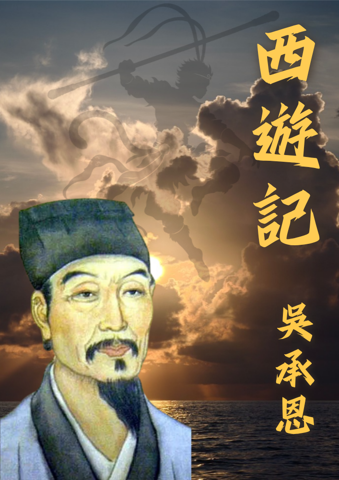
Guide to the Work
Background: Written during the Ming Dynasty, Journey to the West draws from historical accounts of Xuanzang's pilgrimage to India, folk storytelling, Buddhist and Taoist mythologies, and the theatrical traditions of its time. It serves as both a religious allegory and a popular adventure novel. The celestial courts, demons, landscapes, and the path to the Western Heaven constitute a vast and satirical mythological universe, embedding reflections on bureaucratic order, human desire, and spiritual discipline. This context is more than a historical footnote; it shapes the work's understanding of power, desire, and individual choice. By grasping this cultural fabric, readers can see the deep anxieties and value conflicts beneath the plot.
Synopsis: The novel follows the Tang Monk (Xuanzang) on his mission to retrieve sacred scriptures from the Western Heaven. Along the way, he recruits Sun Wukong (the Monkey King), Zhu Bajie (Pigsy), Sha Wujing (Sandy), and the White Dragon Horse. The disciples endure eighty-one tribulations, each featuring demons, temptations, or misunderstandings that test their faith, desires, and cooperation. Sun Wukong is powerful but must learn restraint; the Tang Monk is compassionate but often deceived; Bajie clings to worldly pleasures, while Sha Wujing remains steady. The journey to the West is ultimately a journey of the mind. Readers can view the plot as a series of tests: how characters face misjudgment, loss, or desire is often more significant than the events themselves.
Literary Features: The work blends mythological fantasy, comedic language, the episodic structure of the zhanghui novel, and religious symbolism. Its narrative is highly visual—the battles, transformations, magical artifacts, and creature designs possess a theatrical quality. It does not merely celebrate heroes; it shows characters moving forward despite their flaws, depicting spiritual cultivation as a process of falling and regrouping. Its humor, satire, and imagination are the keys to its timelessness. Its beauty lies in transforming abstract thought into tangible scenes and actions, with layers of irony and symbolism that invite re-reading beyond mere entertainment.
Encyclopedia
Author's Life: Journey to the West is generally attributed to Wu Cheng'en, though its formation involved a long accumulation of folk legends and plays. Wu was a Ming Dynasty literatus with limited surviving biographical data; posterity regards him as the key figure who gave the novel its final form. This composite authorship reflects the text itself: not an isolated creation, but a classic shaped by folk, religious, and scholarly traditions. Understanding the author helps identify recurring themes: power, faith, identity, displacement, and frustration.
Relationship between Author and Work: As the core editor and creator, Wu Cheng'en demonstrated the ability of the literati to organize folk tales. He transformed the pilgrimage legend into a complete novel, making characters like Sun Wukong both entertaining and symbolic. The relationship is not purely autobiographical but editorial-creative: standing on a vast tradition, the author forged scattered legends into a lasting literary universe through language, structure, and satire.
Reflections of a Classic: In the last decade, adaptations have flourished, including Journey to the West: The Demons Strike Back (2017), Wu Kong (2017), The Monkey King 3 (2018), and the Netflix animation The Monkey King (2023). These often emphasize individual heroism or spectacle, while the original emphasizes the group dynamic and the gradual discipline of cultivation. Modern adaptations often turn the pilgrimage into a quest for self-identity. Comparing them allows us to see how the same questions are reorganized across different media."
In China during the Tang Dynasty, the young and devout monk Xuanzang, known as Tripitaka, is chosen by the Emperor and guided by the Bodhisattva Guanyin to undertake a monumental journey. He must travel west to India to retrieve sacred Buddhist scriptures and bring enlightenment back to his homeland. Knowing the road is fraught with deadly perils and countless demons seeking to feast on his flesh, Guanyin arranges for powerful guardians to protect him. First among them is Sun Wukong, the Monkey King. Born from a magical rock, Sun Wukong had previously mastered supernatural martial arts, transformed at will, and wreaked havoc in Heaven until the Buddha trapped him beneath a mountain for five hundred years. Freed by Tang Seng on the condition of protecting him, Sun Wukong receives a golden fillet around his head, allowing the monk to control his wild temper through a magic chant. Joining them along the way are Zhu Bajie, a disgraced heavenly general reincarnated as a greedy, comic pig-demon; Sha Wujing, a loyal water-monster seeking redemption; and a dragon prince who transforms into a white horse to carry the master. Together, this unlikely band encounters eighty-one harrowing trials across vast deserts, fiery mountains, and enchanted kingdoms. Monsters, spirits, and cunning demons constantly capture Tang Seng, drawn by the legend that a single bite of his flesh bestows immortality. Time and again, Sun Wukong relies on his fiery eyes that perceive true evil, his iron-yielding magic staff, and his clever wits to defeat these foes, often seeking aid from celestial deities and the compassionate Guanyin when magic alone is not enough. Through every hardship, the companions learn patience, teamwork, and spiritual discipline, overcoming not only external monsters but also their own inner flaws. After many years of tireless travel, the pilgrims finally reach the Vulture Peak in India, appearing before the Buddha at the Thunder Monastery. They successfully obtain the true scriptures and are borne back to the capital city of Chang'an aboard clouds guided by the Eight Vajrapanis. Tang Seng presents the five thousand and forty-eight volumes of sacred texts to Emperor Taizong, who receives them with immense gratitude and composes an immortal preface celebrating the holy teachings. Having fulfilled their divine mandate, the companions are summoned back to the Western Paradise for their final judgment. The Buddha rewards each according to his spiritual growth and merit: Tang Seng is consecrated as the Sandalwood Merit Buddha, and Sun Wukong is honored as the Victorious Fighting Buddha, at which moment the golden fillet around his brow naturally vanishes, signifying his true enlightenment and freedom. Zhu Bajie becomes the Cleaner of the Altars, Sha Wujing is appointed a Golden-Bodied Arhat, and the white dragon horse is transformed into a majestic dragon wrapping around a heavenly pillar. With all five pilgrims reaching ultimate spiritual perfection, the celestial realm rejoices in eternal harmony.
Taking the register, Wukong crossed out every single entry under the category of monkeys, striking out all that were named. Tossing the ledger aside, he declared, "Settled, then! Settled! From now on, we are no longer subject to your control.Original: 悟空拿過簿子,把猴屬之類,但有名者,一概勾之。捽下簿子道:「了帳,了帳,今番不伏你管了。」Journey to the West Chapter 3. It vividly encapsulates Sun Wukong's defiant nature and his audacious rebellion against mortal boundaries and cosmic hierarchy.
Seek not the Buddha afar on Spirit Mountain; Spirit Mountain resides within your own mind. Each person possesses a Spirit Mountain Pagoda—turn within, and cultivate beneath its shade.Original: 佛在靈山莫遠求,靈山只在汝心頭。人人有個靈山塔,好向靈山塔下修。Journey to the West Chapter 85. It distills the core philosophical thesis of the entire pilgrimage, reminding the traveler that spiritual enlightenment is an internal realization rather than a physical destination.
That Sun the Great Sage closely guarded Tang Sanzang; the scripture-seeking monk relied entirely on the Handsome Monkey King.Original: 那孫大聖護定唐三藏,取經僧全靠著美猴王。Journey to the West Chapter 82. It succinctly captures the dynamic bond of mutual reliance and protection between the master and his chief disciple amidst constant peril.
The original Ming Dynasty novel is an extensive classical Chinese work, but its structural layout makes it accessible. It is organized into episodic chapters, functions like a serialization, and balances dense poetic descriptions with lively, direct dialogue. Readers unaccustomed to historical Chinese honorifics, Buddhist terminology, or bureaucratic ranks may initially find the dense character rosters challenging. However, the overarching plot follows a repetitive, highly engaging rhythm: the group arrives in a new region, encounters a localized crisis or demonic trap, and uses strategy or divine intervention to resolve it. Modern translated editions and annotated versions streamline the prose, making the story's sharp humor, dynamic fight sequences, and rich character interactions completely readable for contemporary audiences without requiring a specialized background in East Asian history.
Journey to the West is celebrated as a masterpiece because it brilliantly fuses high fantasy, religious allegory, and social satire into a universally relatable narrative. On a literal level, it is a thrilling adventure story featuring memorable characters, shapeshifting magic, and martial heroics. On a deeper level, it functions as a complex psychological and spiritual map, where each member of the group represents a different facet of the human psyche: intellect, desire, willpower, and moral conscience. Furthermore, its playful critique of rigid bureaucratic hierarchies, paired with its rich theatrical language, allowed it to transcend its era. It laid the narrative foundation for modern East Asian pop culture, directly inspiring countless modern fantasy works, comic books, video games, and cinema adaptations.
The resolution of the epic pilgrimage brings every character face to face with the ultimate measurement of their spiritual evolution. After crossing thousands of miles and surviving dozens of deadly encounters, the team reaches the holy sanctuary at Vulture Peak to claim the sacred texts. How the Buddha tests their readiness, what happens when the physical books are first unveiled, and the specific celestial honors bestowed upon each traveler represent the culmination of their lifelong struggle. Rather than a simple journey home, the final sequence reshapes the cosmic standing of every pilgrim and reveals the true meaning behind their long suffering. The exact details of their divine promotions and final transformations are best experienced directly within those closing chapters.
While Sun Wukong possesses vast martial power, seventy-two magical transformations, and near-invulnerability, he is not supreme. The cosmic hierarchy places the Buddha, the Bodhisattva Guanyin, and several high celestial deities above him in wisdom and authority. Throughout their travel, Sun Wukong frequently encounters specialized monsters whose unique magic items or innate abilities overpower his raw force, forcing him to seek assistance from higher spiritual beings. The story continually emphasizes that wisdom, self-control, and divine enlightenment ultimately supersede brute physical strength or magical power.
Sun Wukong begins as an anti-hero whose boundless pride and rebellion threaten the stability of Heaven. His early actions are driven by self-aggrandizement, leading to his divine imprisonment. However, his release and appointment as Xuanzang's protector mark the start of a genuine moral transformation. Although he remains hot-tempered and quick to violence, his fierce loyalty, sharp intellect, and tireless dedication to protecting his master demonstrate his transition into a true hero and spiritual guardian.
The primary travelers function as an allegory for the different aspects of an individual human being navigating life. Xuanzang represents the moral mind and spiritual intention, which is pious yet easily deceived by surface appearances. Sun Wukong symbolizes the volatile mind and intellect, capable of great achievement but requiring discipline. Zhu Bajie represents physical desire, gluttony, and basic human instincts. Sha Wujing represents steadiness, patience, and physical labor. Together, they form a complete human entity working toward self-mastery.
Miva: the next reading experience beyond audiobooks
Listen like an audiobook, then ask anything, anytime.
Start Miva's narrationMiva does not just narrate. It keeps explaining based on what you ask.