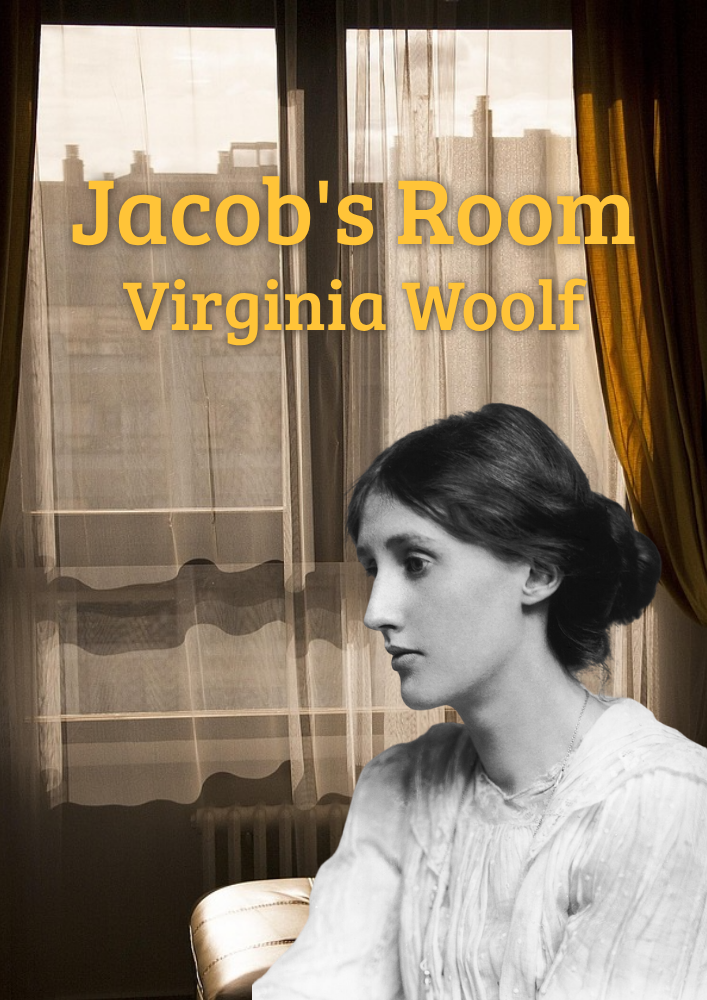
Background: The First World War altered the British experience of death and forced the novel to rethink how to depict a person's existence. In this work, Woolf avoids traditional biographical narrative, instead constructing the protagonist Jacob through fragments, observation, and absence. Jacob’s Room connects contexts such as modernism, Woolf's own oeuvre, post-war literature, the concept of absence, stream of consciousness, and English literature. Rather than using the era as a decorative backdrop, she allows social shifts, class pressures, post-war spirit, and the sense of the modern city to enter the characters' tone, choices, and silences. Readers can thus understand why this work resonated in its time and see the cultural questions it addresses.
Synopsis: The novel tracks fragments of Jacob's life from childhood, Cambridge, and travel to his young adulthood, yet the reader can never fully grasp him. Friends, his mother, various women, and social occasions provide scattered profiles; ultimately, the absence caused by war makes the character's outline sharper yet more painful. As the story progresses, Jacob’s Room relies not just on plot twists, but on character relationships, shifting perspectives, and the accumulation of scenes to create tension. Readers follow the main characters into the dilemmas of romance, travel, family, social life, or spiritual exploration, gradually seeing how surface order is driven by desire, memory, duty, and misunderstanding. The core plot is preserved here while avoiding revealing the most critical impact of the ending prematurely.
Literary Features: Readers can see how Woolf moves from a character's inner self toward a structure of perception, using fractured forms to respond to the loss of war. This is a quiet but radical novel, suitable for understanding how modernism handles unspeakable mourning. Regarding literary features, what makes Jacob’s Room noteworthy is not an abstract "classic" status, but how it utilizes narrative rhythm, symbolic imagery, character voices, and structural arrangements to make loneliness, disillusionment, or spiritual crisis a felt reading experience. It is also suitable for reading alongside other modernist, Jazz Age, and post-war literary works to observe how different writers handled the individual in a broken era.
Encyclopedia
Author's Life: Virginia Woolf (1882–1941) was an English novelist, critic, and central member of the Bloomsbury Group, as well as a pivotal figure in modernism and feminist literary history. She is famous for her use of stream of consciousness, temporal structures, interior monologues, and sensory details, excelling at depicting the subtle yet violent psychological fluctuations of everyday life. Woolf's work focuses on the female condition, class, trauma, memory, urban experience, and artistic form, pushing the novel from external plot into the depths of consciousness and changing the way readers understand character and time. Her creations are not just entries for famous authors in literary history; they are frequently re-read in university courses, book clubs, and cross-cultural discussions; the narrative forms, character psychology, and observations of the era in her works still provide effective entry points for understanding modern life.
Relationship between Author and Work: The reason Virginia Woolf was able to write Jacob’s Room is closely related to her era, her creative concerns, and her literary ambitions. This work concentrates the issues the author long focused on—modernism, Woolf's style, post-war literature, absence, stream of consciousness, and English literature—and transforms them into a readable experience through specific characters and narrative forms. It is not a simple projection of the author's biography, but the result of the author combining personal observation, the pressures of the times, and formal experimentation. Therefore, when reading this book, it is best to pay attention to both the author's life background and how the text reforges that background into literary form.
Miva: the next reading experience beyond audiobooks
Listen like an audiobook, then ask anything, anytime.
Start Miva's narrationMiva does not just narrate. It keeps explaining based on what you ask.