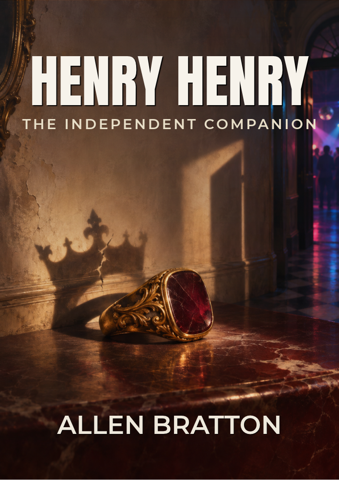
Hal Lancaster is young, gay, Catholic, and heir to an aristocratic house that mistakes tradition for obedience. Under the watch of his father Henry, privilege ceases to be protection and becomes a cage built of guilt, abuse, and dynastic expectations.
Winner of the 2025 Lambda Literary Award in the Gay Fiction category
This contemporary reimagining of Shakespeare’s Henriad moves the struggle for succession to 2014 London.
Bratton does not reproduce Shakespeare scene by scene. He borrows succession, paternal rivalry, dynastic reputation, and the names of the Henriad to expose how a modern ruling class disguises violence as continuity. Hal's material privilege does not cancel his vulnerability; it makes escape harder to name because wealth, Catholic guilt, sexuality, affection, and inherited history all bind him to the institution harming him. The Spanish summary edition demands particular attention to titles, kinship, and the shifting uses of names, since jokes and threats often occupy the same exchange. As the comedy of aristocratic drift begins to fracture, the novel asks whether Hal can inherit a history without repeating its cruelties, and whether love can be recognized when control has borrowed its language.
The Shakespearean pattern gives readers a sense of impending consequence without dictating an exact modern outcome. Bratton uses that expectation to create suspense around apparently casual scenes: a country-house visit, a family joke, or a romantic approach may carry generations of command. Recognizing the echoes enriches the novel, but Hal's struggle remains legible as a contemporary story of abuse, survival, and uncertain freedom.
Relates Hal, Henry, and Harry Percy to their Shakespearean models without requiring prior knowledge.
Distinguishes between Hal's material security and the intimate forms of coercion that structure his life.
Observes how sex, friendship, and affection can function as evasion, risk, or the first step toward a life of one's own.
Suitable for readers of queer fiction, family dramas, class satire, and modern reinterpretations of Shakespeare. Includes sexual abuse, drugs, and emotional violence.
This is a chapter guide and an independent summary, not the original book. It is intended for review and reading support and is best used alongside the complete work.
Miva: the next reading experience beyond audiobooks
Listen like an audiobook, then ask anything, anytime.
Start Miva's narrationMiva does not just narrate. It keeps explaining based on what you ask.