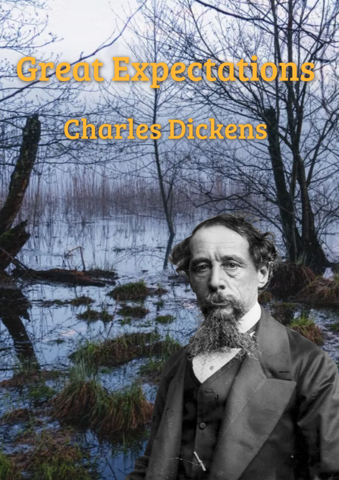
Introduction to the Work
Background: Great Expectations was published during a period of intense shifts in the British class order in the nineteenth century. Industrialization, urbanization, and imperial wealth made social mobility seem possible, yet birth, education, and money continued to strictly discipline individuals. Dickens places the orphan Pip's desire for advancement against this backdrop, making "expectations" both a hope and a temptation; it drives one to change their fate, but can also cause one to feel ashamed of their origins. This background is not just a chronological note; it determines how the work understands power, desire, and personal choice. By grasping this historical context first, readers can see the deeper cultural anxieties and value conflicts behind the plot.
Synopsis: In his youth, Pip encounters the convict Magwitch in the marshes and is later taken to Miss Havisham's chilling manor, where he becomes infatuated with Estella, whom she has trained. When a mysterious benefactor enables Pip to go to London to become a gentleman, he believes he is finally becoming worthy of his ideal love and noble status. Only after the truth is revealed does he understand that wealth, gratitude, guilt, and love are not as pure as he imagined, and that growing up means facing those he left behind. During reading, the plot can be seen as a series of tests: how characters face misjudgment, temptation, loss, or desire is often more important than the events themselves. The progression of the story ensures this classic is not distant from modern experience, but rather returns to the reader's judgment.
Literary Features: The novel unfolds through a first-person retrospective narrative, where an adult Pip looks back on his youthful vanity, imbuing the story with a voice of repentance and self-mockery. Dickens excels at creating symbolic settings: the marshes, the blacksmith shop, London, and the manor that resembles a derelict wedding feast all serve as externalizations of psychological states. The work blends the Bildungsroman, Gothic atmosphere, social satire, and crime fiction, turning class desires into a moral test of great emotional weight. Its beauty lies not just in plot or language, but in how it transforms ideas into tangible scenes and character actions. The twists, contrasts, symbols, and shifts in tone provide layers for re-reading that go beyond mere genre entertainment.
Work Encyclopedia
Author's Life: Dickens is one of the most important novelists of the Victorian era in Britain. His childhood experiences of poverty and factory labor gave him a lifelong focus on children, debt, and class injustice. Even after achieving fame, he maintained a high-output pace of serialized writing, being well-versed in the market and reader expectations. Great Expectations belongs to his later, more concise, and darker body of work, showing a more complex understanding of success, shame, and self-deception. Understanding the author's life helps identify recurring themes: power, faith, identity, displacement, frustration, or the obsession with beauty. These life experiences are not the sole explanation for the work, but they provide a stable entry point for reading.
Relationship between Author and Work: Pip's shame, ambition, and remorse reflect Dickens's own reflections on his experience of fame. The author understands the temptation of the desire to rise and knows that social dignity is often built on the denial of poverty and labor. The novel does not simply condemn Pip; instead, it allows him to slowly learn gratitude after misidentifying his benefactor, loving a phantom, and mistreating his family. Thus, the work serves as Dickens's gentle deconstruction of the dream of "becoming a gentleman." Readers can observe how the author's intellectual concerns are transformed into characters, plot, and narrative pace. The work does not merely state the author's position but allows those positions to be tested within the story, which is why classics can engage in cross-era dialogue.
Classic Mirroring: The BBC/FX series Great Expectations (2023) is a significant adaptation of the last decade. The new version emphasizes dark atmosphere, colonial wealth, gender power, and trauma, nearly transforming the original into a contemporary ethical trial. In contrast, while Dickens's original does not shy away from social cruelty, it retains the possibility of repentance, sympathy, and restoration; the new version is more skeptical of whether redemption is enough to offset the damage caused by systems and desire. Such a comparative reading is not about treating the film adaptation as a replacement for the original, but about seeing how the same set of questions is reorganized across different media. Films often amplify visuals, rhythm, and contemporary issues, while the original preserves finer layers of language and intellectual logic."
In the desolate marismas of England, the story begins with a lonely orphan named Pip. While visiting his parents' graves, Pip is terrorized by Abel Magwitch, an escaped convict who demands food and a file. Driven by fear, Pip secretly steals supplies from his harsh sister and her warm-hearted husband, the blacksmith Joe Gargery. Though Magwitch is soon recaptured, he protects young Pip by taking full responsibility for the stolen food, an act of gratitude that quietly sets the course of Pip’s destiny. Pip’s life shifts dramatically when he is summoned to Satis House, the decaying mansion of the wealthy and eccentric Miss Havisham. Preserved in her faded wedding dress amid cobwebs and stopped clocks, Miss Havisham uses her adopted daughter, the beautiful but icy Estella, to break men's hearts as revenge for being abandoned at the altar. Pip falls desperately in love with Estella. However, her contempt for his coarse, working-class background fills him with shame, instilling a burning desire to abandon his blacksmith apprenticeship and become a refined gentleman. Years later, a wealthy London lawyer named Mr. Jaggers brings shocking news: an anonymous benefactor has bestowed upon Pip a vast fortune, granting him "great expectations." Convinced that Miss Havisham is his secret patron intending him for Estella, Pip eagerly leaves Joe and his humble life behind. In London, he adopts an extravagant lifestyle with his loyal friend Herbert Pocket, rapidly accumulating debts and growing increasingly arrogant, distancing himself from Joe out of embarrassment. The illusion shatters on a stormy night when a weathered traveler enters Pip's London chambers. It is Abel Magwitch, who has spent years in exile making a fortune in Australia. Magwitch triumphantly reveals that he, not Miss Havisham, is Pip’s true benefactor, having vowed to make a gentleman out of the boy who once saved his life. Devastated to learn his wealth stems from a criminal rather than high society, Pip suffers deep moral pain, realizing he abandoned the loyal Joe for an illusion, while Estella was never intended for him at all. Despite his horror, Pip recognizes the immense risk Magwitch has taken; returning to England carries a sentence of death by hanging. Overcome by a sense of duty and growing affection, Pip resolves to help the old convict escape the country. During their preparations, Pip uncovers dark secrets connecting his past: Estella is actually Magwitch’s long-lost daughter, and Miss Havisham’s former lover was the same deceitful accomplice who betrayed Magwitch. Their desperate escape attempt down the Thames ends in tragedy. Betrayed to the authorities, Magwitch is severely injured in a river struggle and captured. As Magwitch lies dying in a prison infirmary, Pip remains faithfully by his side, comforting the old man in his final moments by revealing that his daughter is alive and beloved. Following Magwitch’s death and the total forfeiture of his fortune, Pip falls gravely ill. He is nursed back to health by Joe, whose selfless kindness teaches Pip the true meaning of devotion and nobility. Humbled and redeemed, Pip joins Herbert to work honestly abroad for many years. Upon returning, he visits the ruined grounds of Satis House, where he meets Estella, now softened and transformed by her own suffering, leaving them to step forward into an uncertain yet hopeful future together.
Before I could answer (if I could have answered so difficult a question at all)she repeated, “Love her, love her, love her! If she favours you, love her. Ifshe wounds you, love her. If she tears your heart to pieces,—and as it getsolder and stronger it will tear deeper,—love her, love her, love her!”Great Expectations Chapter 29. This passage reveals Miss Havisham’s warped, vengeful philosophy of love as an instrument of destruction and self-sacrifice, perfectly capturing the obsessive theme that drives Pip's tragic affection for Estella.
You are part of my existence, part of myself. You havebeen in every line I have ever read since I first came here, the rough commonboy whose poor heart you wounded even then. You have been in every prospect Ihave ever seen since,—on the river, on the sails of the ships, on the marshes,in the clouds, in the light, in the darkness, in the wind, in the woods, in thesea, in the streets. You have been the embodiment of every graceful fancy thatmy mind has ever become acquainted with. The stones of which the strongestLondon buildings are made are not more real, or more impossible to be displacedby your hands, than your presence and influence have been to me, there andeverywhere, and will be. Estella, to the last hour of my life, you cannotchoose but remain part of my character, part of the little good in me, part of the evil. But, in this separation, I associate you only with the good; and Iwill faithfully hold you to that always, for you must have done me far moregood than harm, let me feel now what sharp distress I may. O God bless you, Godforgive you!Great Expectations Chapter 44. It stands as one of the most emotionally charged declarations of unrequited love in English literature, illustrating how deeply Pip’s identity, aspirations, and moral sense have been reshaped by his devotion to Estella.
Lookee here, Pip, at what is said to you by a true friend. Which this to youthe true friend say. If you can’t get to be oncommon through going straight,you’ll never get to do it through going crooked. So don’t tell no more on ’em,Pip, and live well and die happy.Great Expectations Chapter 9. This advice establishes Joe as the story's moral anchor, delivering a simple yet profound truth about integrity that contrasts sharply with Pip's subsequent pursuit of social status through deception.
Yes, Pip, dear boy, I’ve made a gentleman on you! It’s me wot has done it! Iswore that time, sure as ever I earned a guinea, that guinea should go to you.I swore arterwards, sure as ever I spec’lated and got rich, you should getrich. I lived rough, that you should live smooth; I worked hard, that youshould be above work. What odds, dear boy? Do I tell it, fur you to feel aobligation? Not a bit. I tell it, fur you to know as that there hunted dunghilldog wot you kep life in, got his head so high that he could make agentleman,—and, Pip, you’re him!Great Expectations Chapter 39. This scene marks the central dramatic turning point of the novel, shattering Pip's snobbish illusions about his benefactor and confronting him with the source of his social elevation.
While Victorian syntax and nineteenth-century vocabulary can initially feel dense, Charles Dickens writes with a lively, narrative velocity that quickly draws readers in. The novel was originally published in weekly serial installments, which required Dickens to construct fast-paced chapters, sharp dialogue, and frequent cliffhangers to keep his audience hooked. Pip narrates the story in the first person as a mature adult reflecting on his youth, combining humor, self-directed irony, and vivid atmospheric descriptions. Obsolete cultural terms or complex legal jargon are easily clarified by context, allowing the plot's psychological tension and dramatic twists to remain accessible to modern readers.
Charles Dickens's novel endures because it offers an extraordinarily sharp critique of social ambition and human vanity that feels strikingly modern. Through Pip's transformation, the text dismantles the myth that wealth, polished manners, and high social standing grant personal happiness or moral superiority. Its iconic characters, such as the vengeful Miss Havisham in her decaying bridal gown or the terrifying convict Abel Magwitch in the marshes, function as indelible archetypes of trauma, gratitude, and societal neglect. The work seamlessly weaves together elements of the Gothic novel, social satire, and psychological realism, producing a timeless reflection on shame, forgiveness, and true nobility.
At the story's climax, every illusion that defined Pip’s youthful ambition collapses to make room for truths he spent a lifetime avoiding. What awaits in the final pages is not the grand social triumph Pip once dreamed of, but a profound reckoning with redemption, forgiveness, and the true cost of gentility. Long-buried secrets surrounding Estella’s true origin, the dark motives behind Miss Havisham’s bitterness, and the quiet, enduring loyalty of those Pip abandoned all converge as his fateful journey reaches its close. As the remaining shadows fall away, Pip faces a transformed future alongside the softened remains of his past. Read these closing pages for yourself.
For much of his life, Pip operates under the firm conviction that Miss Havisham, the wealthy heiress of Satis House, is his anonymous patron financing his transition into high society. This assumption feeds his grand fantasy that she intends for him to marry her ward, Estella. However, the novel delivers a major psychological shift when the true benefactor travels to Pip's London apartment on a stormy night. The individual who financed Pip's education and gentlemanly lifestyle turns out to be Abel Magwitch, the hunted convict Pip aided in the marshes during his childhood. Magwitch accumulated immense wealth in Australia and devoted it all to elevating Pip as an act of absolute gratitude.
Miss Havisham serves as the catalyst for Pip's deep-seated insecurity and social ambition. When Pip is brought to Satis House as a child to play, Miss Havisham intentionally exposes him to her adopted ward, Estella, encouraging the girl to mock his coarse hands and heavy boots. This calculated emotional cruelty instills in Pip a lasting shame regarding his blacksmith background and his honest life with Joe Gargery. Miss Havisham allows Pip to mistakenly believe she is funding his great expectations, using his false hope to keep him attached to Estella and to further her personal vendetta against men.
Satis House is a powerful physical symbol of emotional stagnation, decay, and the corrupting nature of unyielding resentment. Once a prosperous estate, the mansion has been intentionally frozen in time by Miss Havisham ever since she was abandoned on her wedding day. The stopped clocks, closed shutters, cobweb-covered wedding cake, and fading bridal dress mirror her ruined inner life. For Pip, the house represents both an alluring gateway to high society and a dark, gothic prison where genuine human affection is distorted into cruelty and manipulation.
Miva: the next reading experience beyond audiobooks
Listen like an audiobook, then ask anything, anytime.
Start Miva's narrationMiva does not just narrate. It keeps explaining based on what you ask.