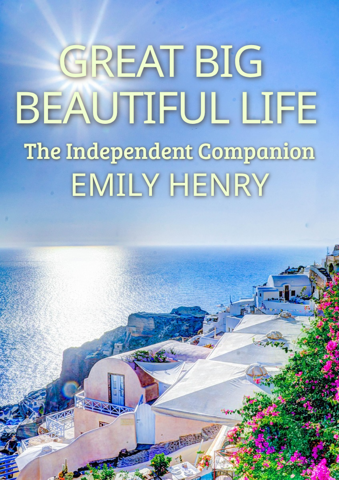
What this collection explores:
These two interviews explain how Great Big Beautiful Life combines romance, rival biographers, family secrets, and competing versions of a celebrated woman's life. Emily Henry discusses how interviewing and writing become struggles over narrative authority, and how romance changes the characters' understanding of ambition, loyalty, and truth.
What readers will find:
Readers will hear about Alice, Hayden, Margaret Ives, Little Crescent Island, family legacy, professional competition, and the management of conflicting accounts. A long publisher podcast supplies craft detail, while a concise public-radio interview highlights the premise and ethics of telling another person's life.
Who it is for:
It is suited to Emily Henry readers, romance and slow-burn fiction fans, and anyone interested in biography, family memory, writers as characters, or layered narrative structure.
Source: Penguin Books UK / Ask Penguin. The longer interview approaches Alice, Hayden, Margaret Ives, the island setting, family inheritance, and professional rivalry through the subject of love and romance.
Source: NPR / WLRN. A concise interview centers on two writers competing for one biography and the novel's questions about secrets, unreliable accounts, and who may tell a life story.
Who owns a life story:
Biography becomes a relationship of power among subject, writer, and family members who select, withhold, and reshape personal material.
Competition and intimacy:
Alice and Hayden are professional rivals and close observers of each other, forcing both to confront ambition and bias.
Love, family, and truth:
Romance and intergenerational secrets mirror one another, raising the possibility that no single account can contain the whole truth.
The Penguin Podcast gives Henry room to discuss setting, character, and romance conventions. NPR / WLRN sharpens attention on narrative ownership and biographical ethics. Together they show her responding to genre expectations while explaining a broader interest in family memory and the control of stories.
Begin with the NPR / WLRN interview for a compact, low-spoiler orientation, then continue to the Penguin Podcast for character relationships, process, and genre. The transcripts preserve Henry's explanations and the hosts' follow-up questions; the novel controls the full pace of revelation and emotional accumulation.
Grounding Statement:
This content is based on the listed event transcripts. It presents the ideas discussed in those conversations and does not represent the complete contents of the original book.
Miva: the next reading experience beyond audiobooks
Listen like an audiobook, then ask anything, anytime.
Start Miva's narrationMiva does not just narrate. It keeps explaining based on what you ask.