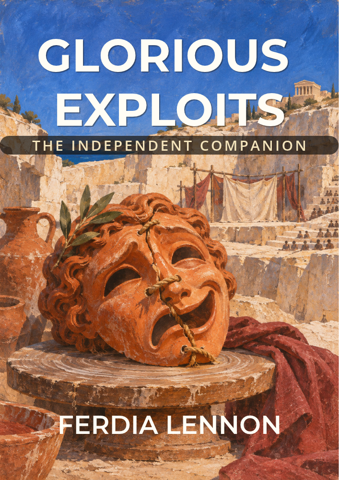
In defeated Syracuse, two unemployed potters decide that starving Athenian prisoners should perform Euripides before they die. What begins as an audacious theatrical scheme forces Lampo and Gelon to confront friendship, complicity, grief, and the uncomfortable power of art across enemy lines.
2024 Waterstones Debut Fiction Prize — Winner; 2024 Bollinger Everyman Wodehouse Prize for Comic Fiction — Winner; 2025 Premio Gregor von Rezzori — Winner
Set after Athens' disastrous Sicilian expedition, the novel folds ancient war into an Irish-inflected comic voice.
The novel's comedy never erases the material fact on which the scheme depends: Syracuse has won, and the Athenian captives are starving in a quarry. Lampo and Gelon can love Euripides while remaining implicated in the prisoners' suffering. Lennon's deliberately modern, Irish-inflected dialogue strips antiquity of museum glass and returns history to ordinary people who drink, quarrel, boast, and make morally compromised choices. The rehearsals therefore do more than prepare a performance. They alter who may speak, who must listen, and whether cultural admiration can become responsibility. Readers should watch the moments when a joke abruptly gives way to hunger, mourning, or shame; those changes in register carry the novel's deepest argument about art in wartime.
The theatre project also changes the scale of historical attention. Famous generals remain largely outside the frame while craftsmen, prisoners, bereaved families, and would-be actors carry the consequences of policy. This choice makes performance a form of counter-history: not an escape from war, but a way of asking whose pain survives in the stories a victorious city chooses to tell.
Track how slang, banter, and theatrical improvisation create laughter without erasing captivity or hunger.
See how remembered lines of Euripides become currency, refuge, and a test of moral imagination.
Follow the changing balance between Lampo's impulsiveness and Gelon's grief-driven devotion to theatre.
Readers of historical fiction, classical retellings, dark comedy, and novels about art during war will find the guide especially useful.
This is an independent chapter guide and summary, not the original book. It is designed for review and reading support and is best used alongside the full work.
Miva: the next reading experience beyond audiobooks
Listen like an audiobook, then ask anything, anytime.
Start Miva's narrationMiva does not just narrate. It keeps explaining based on what you ask.