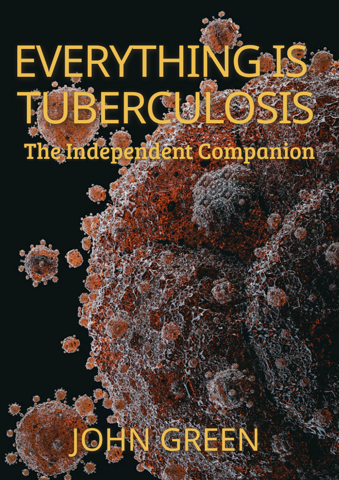
What this collection explores:
This collection uses two interviews to show how John Green places one young patient's life within the long history of tuberculosis. The conversations address pathogens and treatment, but they also examine how poverty, drug prices, nutrition, infrastructure, stigma, and political choice determine who receives a cure.
What readers will find:
Readers will encounter Henry's story, the architectural and cultural traces of tuberculosis, advances in diagnosis and medicine, and the continuing gap in access to care. The two programs bring complementary perspectives from design and narrative journalism on one side and concise science communication on the other.
Who it is for:
It is suited to readers of medical history, global health, science communication, health equity, education, and narrative nonfiction.
Source: 99% Invisible. The longer program moves from the disease's imprint on buildings and culture to Henry's story, medical history, diagnostic tools, and access to treatment.
Source: Scientific American / Science Quickly. This focused science interview asks how tuberculosis shaped modern society and why a curable disease still kills so many people.
Disease and social choice:
The discussions show that bacteria alone cannot explain persistence; housing, nutrition, medicine, stigma, and health systems also shape outcomes.
A person inside a global history:
Henry's experience gives readers a human route into statistics and history without reducing a patient to a representative case.
Curable but not universally cured:
The interviews ask why available tools fail to reach everyone and locate hope in institutions and choices that can still be changed.
Green has room in 99% Invisible to braid Henry's life, history, design, and policy. In Scientific American, he condenses the argument into a clearer scientific outline. Across both settings, he adjusts the level of detail while retaining attention to patient dignity and global inequality.
Start with the shorter Scientific American interview for an overview, then read the longer 99% Invisible conversation to follow the links among personal experience, history, architecture, and policy. The transcripts preserve questions and spoken elaboration; the book offers the complete sourcing, chronology, and narrative design.
Grounding Statement:
This content is based on the listed event transcripts. It presents the ideas discussed in those conversations and does not represent the complete contents of the original book.
Miva: the next reading experience beyond audiobooks
Listen like an audiobook, then ask anything, anytime.
Start Miva's narrationMiva does not just narrate. It keeps explaining based on what you ask.