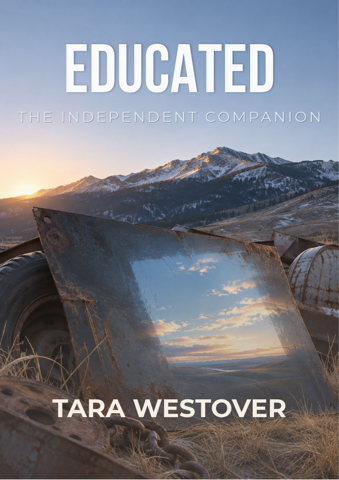
A childhood shaped by isolation and family certainty collides with classrooms that give Tara Westover new language for history, violence, loyalty, and selfhood.
2019 American Booksellers Association Indies Choice Book of the Year—Adult Nonfiction, winner; 2018 Los Angeles Times Book Prize—Biography, finalist; 2018 PEN/Jean Stein Book Award, finalist; 2018 National Book Critics Circle Award—Autobiography, finalist; Amazon Best Book of 2018
This memoir follows Westover from a survivalist household in rural Idaho to Brigham Young University and Cambridge. Education becomes more than schooling: it changes which memories she can name, which authorities she can question, and what belonging may cost.
Westover builds meaning through the distance between the child who experiences an event and the adult who can finally interpret it. Scenes of work, music, study, travel, and illness repeatedly change the scale of Tara’s world. Pay attention to journals, emails, phone calls, and remembered dialogue: they show both the evidence available to the narrator and the limits of retrospective certainty. The strongest reading holds intellectual liberation beside grief for the belonging it disrupts.
Track how unfamiliar historical references first expose gaps in Tara’s schooling, then become tools for examining assumptions she once experienced as unquestionable.
The memoir repeatedly compares incompatible accounts of injury and abuse. The guide marks where certainty fractures without pretending that every conflict can be neatly resolved.
Academic achievement creates opportunity but also deepens the distance between Tara’s developing judgment and the family identity that once defined her.
Read the chapters as a changing record of what Tara can name. Early practical competence coexists with historical ignorance; later academic success coexists with shame, illness, and conflicting family testimony. Tracking when her vocabulary for injury, authority, and loyalty changes prevents the memoir from collapsing into a simple escape story. It also prepares book-club readers to discuss memory, class mobility, estrangement, and the ethics of writing about living relatives. The account includes abuse, serious injury, psychological distress, and family rupture.
Choose this book if you want a memoir that refuses both easy condemnation and easy reconciliation, and if you are willing to examine how knowledge changes a person without automatically healing the family they came from.
This is an independent chapter guide and summary, not the original book. It is designed for review and reading support and is best used alongside the full work.
Miva: the next reading experience beyond audiobooks
Listen like an audiobook, then ask anything, anytime.
Start Miva's narrationMiva does not just narrate. It keeps explaining based on what you ask.