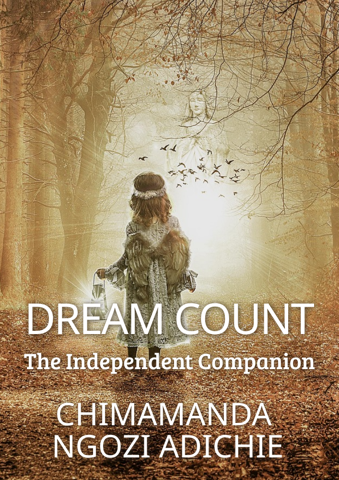
What this collection explores:
This conversation collection enters the creative world of Dream Count through its four interwoven women, their experiences of love and loss, friendship and choice, and the gradual emergence of character during the writing process. Chimamanda Ngozi Adichie offers a direct route into the novel's emotional concerns and narrative design without reducing the book to a plot summary.
What readers will find:
Readers will encounter Adichie's reflections on returning to the novel after eleven years, the arrival of four distinct points of view, the distance between lived experience and fiction, and the roles of motherhood, desire, migration, grief, and artistic freedom. Audience questions broaden the discussion and reveal how different readers locate themselves in the work.
Who it is for:
For readers preparing to begin or revisit Dream Count, students of contemporary African and diasporic writing, readers interested in women's narratives and multiple points of view, and writers curious about how a novelist follows character intuition into long-form structure.
Library of Congress National Book Festival / PBS. At the Library of Congress National Book Festival, Adichie and Michel Martin begin with the novel's four women and expand into character formation, narrative perspective, love, grief, reception, and writing practice. The audience discussion adds further context about gender, relationships, and the connections between fiction and experience.
Women and multiple points of view:
The four women are not illustrations of a single thesis but characters with different desires, blind spots, and choices. The conversation shows how their voices echo, challenge, and illuminate one another.
Love, loss, and self-understanding:
Romantic relationships, family memory, and grief occupy the same emotional landscape, raising questions about how people reinterpret the past after loss.
Character-led creation:
Adichie describes characters making themselves known before a complete structure exists, revealing the movement among intuition, revision, and narrative arrangement.
Adichie does not substitute chapter-by-chapter explanation for the novel. Instead, she returns to creative judgment: how she hears characters, works across the time scale of a novel, and responds to questions about gender, relationships, and cultural position.
Read the main interview first for the broad creative framework, then continue into the audience questions for additional paths into the novel. The transcript preserves voice, hesitation, and live follow-up; the book supplies the complete character arcs, narrative architecture, and literary language.
Grounding Statement:
This content is based on the listed event transcripts. It presents the ideas discussed in those conversations and does not represent the complete contents of the original book.
Miva: the next reading experience beyond audiobooks
Listen like an audiobook, then ask anything, anytime.
Start Miva's narrationMiva does not just narrate. It keeps explaining based on what you ask.