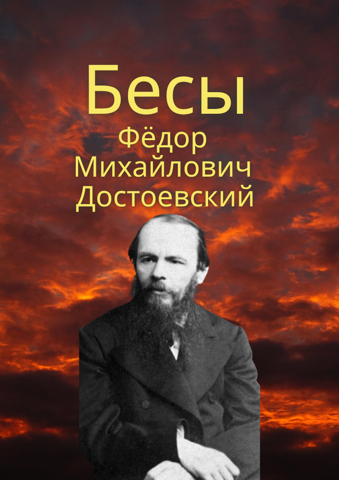
Guide to the Work
Background: Demons was written during a period of intense intellectual upheaval in 19th-century Russia, characterized by nihilism, revolutionary organizations, Westernization anxieties, and religious crises. Dostoevsky uses a provincial town as a stage to show how abstract ideas can possess a person, turning into manipulation, betrayal, and violence. The novel is not merely anti-political; it asks whether freedom becomes destructive self-deification once faith and responsibility collapse. This background is not just a chronological note but determines how the work understands power, desire, and individual choice. By grasping this historical context, readers can see the deeper cultural anxieties and value conflicts behind the plot.
Synopsis: The story revolves around characters such as Stavrogin and Pyotr Verkhovensky. The local society appears calm on the surface but is filled with resentment, ambition, secrets, and ideological incitement. A small revolutionary cell creates conspiracies in the name of ideals, where characters exploit, seduce, and betray each other, eventually leading to murder and mental breakdown. The plot is complex, acting like a record of the spread of an ideological plague, where private sins and public disasters ignite one another. Reading the plot as a series of tests—how characters face misjudgment, temptation, loss, or desire—is often more important than the events themselves. The progression of the story ensures that this classic is not removed from modern experience but returns to the reader's judgment.
Literary Features: This book blends political fiction, psychological fiction, and satirical farce, with a tone that shifts between the grotesque and the terrifying. Dostoevsky excels at letting characters expose spiritual rifts through long dialogues, making ideas more than just concepts, but forces that change voices, expressions, and actions. The structure of the novel may seem chaotic, but it actually represents social disorder itself; readers feel a spiritual pressure approaching disaster amidst the cacophony. Its beauty lies not just in plot or language, but in how thoughts are transformed into perceptible scenes and character actions. The twists, contrasts, symbols, and shifts in tone provide layers for rereading that go beyond genre entertainment.
Encyclopedia
Author's Life: Fyodor Dostoevsky was arrested for participating in an intellectual circle, experienced a mock execution, and was exiled to Siberia, later turning toward deeper religious and ethical reflections. His works repeatedly deal with guilt, freedom, faith, suffering, and redemption. Demons carries his anxiety regarding radical politics and atheist thought, while continuing his high sensitivity to the abyss of the human soul. Understanding the author's life helps identify recurring themes: power, faith, identity, displacement, frustration, or the obsession with beauty. These life experiences are not the sole explanation for the work, but they provide a solid entry point for reading.
Relationship Between Author and Work: Demons is inseparable from Dostoevsky's life experiences. The author was familiar with the temptation of revolutionary ideas and personally felt the potential cost of political conviction. He did not write his characters as thin propaganda symbols but allowed everyone to carry pain, arrogance, and emptiness. The work is thus both an ideological critique and a self-reckoning: he examines the spiritual dangers he once approached. Therefore, while reading, one can observe how the author's intellectual concerns are transformed into characters, plot, and narrative rhythm. The work does not simply state the author's position but allows these positions to be tested within the story, which is why classics can engage in cross-generational dialogue.
Classic Reflection: In the last decade, it can be compared to Joker (2019). Both show how individual resentment and social disorder amplify each other, making the audience feel that violence does not appear out of thin air. However, Joker focuses on isolated individuals and media spectacles, while Demons emphasizes ideological organization, group incitement, and the contagion of spiritual emptiness. It reminds readers that if ideas are detached from responsibility, they may become true demons. Such a comparative reading does not replace the original with a film adaptation but sees how the same set of problems is reorganized across different media. Films often amplify visuals, rhythm, and contemporary issues, while the original retains finer linguistic layers and ideological logic."
Miva: the next reading experience beyond audiobooks
Listen like an audiobook, then ask anything, anytime.
Start Miva's narrationMiva does not just narrate. It keeps explaining based on what you ask.