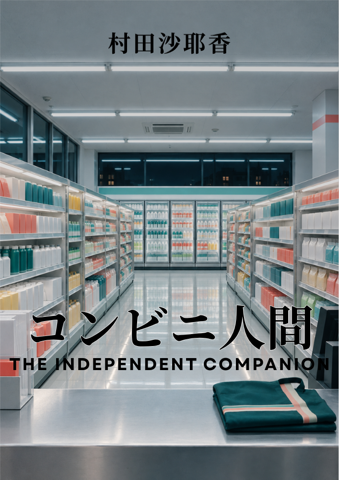
Convenience Store Woman is a novel by Sayaka Murata that draws readers into a story from the moment the shape of daily life begins to shift. For a woman who only becomes understandable to herself when she is performing the rhythms of a convenience store, those around her pressure her to exchange her functional lifestyle for a "normal" script.
This is an independently produced reading guide and summary that organizes the process by which Keiko internalizes the sounds, manuals, and behaviors of the store, while facing demands for a "normal" life from her family, colleagues, and Shiraha. It does not contain the original text and does not judge her final choices in advance.
Winner of the 155th Akutagawa Prize.
In the convenience store, Keiko can be a capable clerk by following clear rules; however, outside the store, she is pressured to marry, change jobs, and perform "normality." The work asks whether social adaptation is a method of self-survival, a necessary performance, or allowing others to define one's self.
Following the flow of the chapters, this guide examines how Keiko internalizes store sounds, uniforms, manuals, and the speech patterns of others. By separating the "concerns" of family and friends, Shiraha's logic, and the roles required at work, the boundary between adaptation and coercion becomes clearer. The structure allows readers to follow the moment Keiko's own senses return without prejudging her final choice.
Follow the scenes where Keiko constructs her actions from store sounds, uniforms, and manuals, reading how labor serves as both a constraint and a comprehensible language for her.
Categorize the "normal" vocabulary used by family, friends, and colleagues, and organize the mechanisms by which pressure to marry or find full-time employment is repeated under the guise of goodwill.
Focus on how living with Shiraha creates a different role-play rather than liberation, tracking Keiko's journey until the moment she regains her own senses just before the conclusion.
Suitable for readers interested in short literary fiction, cool-headed social satire, and norms surrounding labor, gender, and marriage. It is not a heartwarming workplace novel, making it ideal for book clubs wishing to discuss the distance of the narrative—which refuses to easily diagnose Keiko—and the pressures hidden in everyday language.
About this Edition: This product is an independently produced chapter guide and summary, not the original text. It is recommended for use alongside the full original work for review and reading support.
Miva: the next reading experience beyond audiobooks
Listen like an audiobook, then ask anything, anytime.
Start Miva's narrationMiva does not just narrate. It keeps explaining based on what you ask.