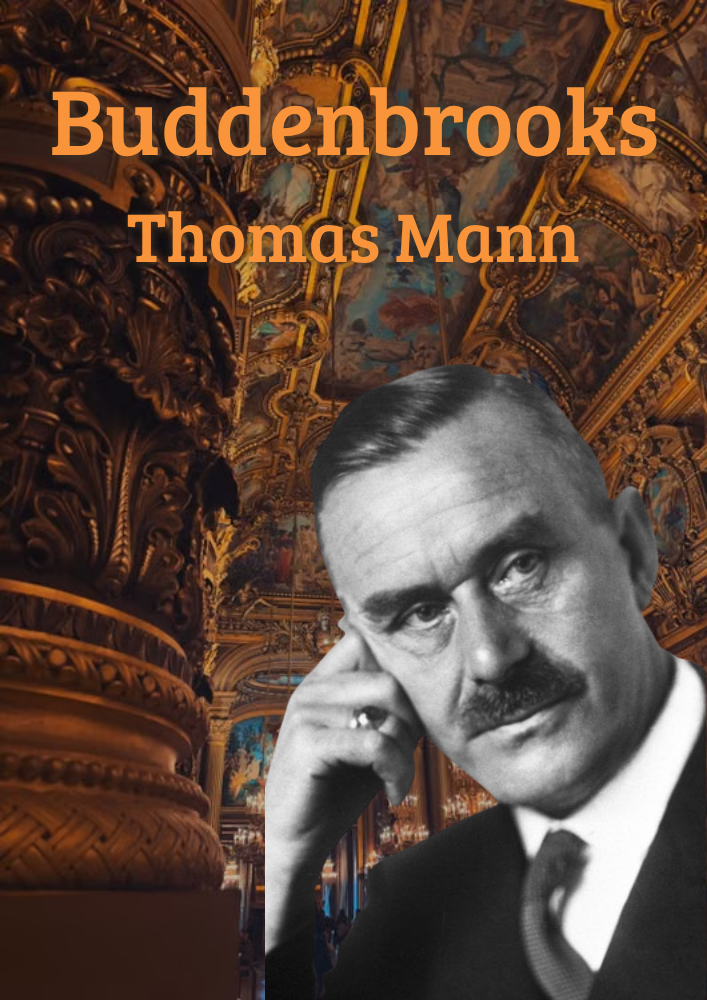
Background: The 19th century saw the rise of the German bourgeoisie, where commercial ethics, family honor, and individual desire formed a new social order. Mann depicts the process of bourgeois civilization moving from self-confidence to exhaustion through the rise and fall of the Buddenbrook family. Buddenbrooks, Volume 1 connects threads of the family saga, German literature, the bourgeoisie, social history, Thomas Mann, and decadence. It does not treat the era as decorative background, but allows social shifts, class pressures, post-war spirit, or modern urban sensibility to enter the characters' tones, choices, and silences. Readers can thus understand why this work resonated in its time and see the cultural questions it addresses.
Synopsis: The first volume unfolds the family's commercial empire, marriage arrangements, social rituals, and generational expectations. Behind the surface prosperity, differences in character, emotional sacrifice, and cracks in values are already visible. Every family decision is a choice that simultaneously maintains decency and consumes life. As the story progresses, Buddenbrooks, Volume 1 relies not only on plot twists but also on character relationships, shifts in perspective, and the accumulation of scenes to create tension. Readers will follow the main characters into dilemmas of romance, travel, family, social life, or spiritual exploration, gradually seeing how the surface order is driven by desire, memory, duty, and misunderstanding. Core plots are preserved here, while avoiding premature disclosure of the most critical final impacts.
Literary Features: Readers can see how the family saga carries social history and understand how Mann's details turn dining tables, ledgers, marriage contracts, and illness into evidence of civilizational decline. Regarding literary features, what is noteworthy about Buddenbrooks, Volume 1 is not its abstract "classic" status, but how it uses narrative pace, symbolic imagery, character voices, and structural arrangement to make loneliness, disillusionment, or spiritual crisis a palpable reading experience. It is also suitable for reading alongside other works of modernism, the Jazz Age, and post-war literature to observe how different writers handle individuals in a fractured era.
Encyclopedia of the Work
Author's Life: Thomas Mann (1875–1955) was a German novelist and essayist who won the Nobel Prize in Literature in 1929. His works often center on the bourgeoisie, family order, the artistic temperament, illness, moral anxiety, and the crisis of European civilization, placing grand intellectual questions within precise narrative structures and life details. Mann's writing combines irony, psychoanalysis, and a cultural-historical perspective, particularly excelling at describing how rational order is gradually eroded by desire, beauty, fatigue, and death. His creation does not only belong to the entries of famous masters in literary history; it is often re-read in university courses, book clubs, and cross-cultural discussions. The narrative forms, character psychology, and observations of the era in his works still provide effective entry points for understanding modern life.
Relationship between Author and Work: Thomas Mann's ability to write Buddenbrooks, Volume 1 is closely related to his era, creative concerns, and literary ambitions. This work concentrates the author's long-term interests in the family saga, German literature, the bourgeoisie, social history, Thomas Mann, and decline, transforming them into a readable experience through specific characters and narrative forms. It is not a simple projection of the author's life, but the result of the author combining personal observation, the pressures of the era, and formal experimentation. Therefore, when reading this book, it is best to pay attention to both the author's life background and how the text reforges that background into literary form.
Miva: the next reading experience beyond audiobooks
Listen like an audiobook, then ask anything, anytime.
Start Miva's narrationMiva does not just narrate. It keeps explaining based on what you ask.