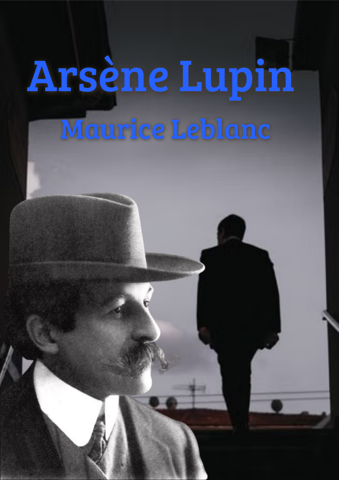
Guide to the Work
Background: Arsène Lupin was born in early 20th-century French popular periodicals, a time when newspaper serialization, urban crime news, and detective fiction were flourishing. Leblanc utilized multiple personas—gentleman, thief, master of disguise, and patriot—to create an anti-hero who both challenges police order and captivates readers. Behind the work lie the shadows of Parisian modernity, class mobility, and the mass entertainment market, responding to the dominant popularity of Holmesian rational detectives. This background is not just a chronological note; it determines how the work understands power, desire, and individual choice. By grasping this historical context first, readers can see the deeper cultural anxieties and value conflicts behind the plot.
Synopsis: This book consists of several Lupin stories where readers see him stealing treasures, designing identities, outwitting the powerful, and suddenly flipping the script just as his pursuers think they have grasped the truth. Lupin's cases are often not simple thefts of property, but meticulously arranged stage performances; he makes victims, detectives, and readers alike participants in his game. The joy of the stories comes when the mystery is revealed, and seemingly insignificant clues suddenly connect into an elegant plan. When reading, one can view the plot as a series of tests: how characters face misjudgment, temptation, loss, or desire is often more important than the events themselves. The progression of the stories ensures that the classic is no longer distant from modern experience but returns to the reader's judgment.
Literary Features: Leblanc's narrative pace is light and brisk, excelling at using letters, pseudonyms, locked rooms, lost items, and social scenes to drive suspense. Lupin is both a criminal and a director/actor; he wraps illegal actions in humor and etiquette, making moral judgment ambiguous. The work is not heavy like hard-boiled crime fiction but blends reasoning, adventure, romance, and satire into a highly entertaining reading experience, leaving readers swaying between solving the case and admiring the trickery. Its beauty lies not just in plot or language, but in how thoughts are transformed into perceptible scenes and character actions. The reversals, contrasts, symbolism, and tonal shifts within the work give it layers worth rereading, moving beyond mere genre entertainment.
Work Encyclopedia
Author's Biography: Maurice Leblanc was a French novelist and journalist, influenced early on by naturalism and psychological novels, who later gained immense fame for the Arsène Lupin series. After Lupin's first appearance in 1905, he quickly became a key figure in French popular literature. Leblanc continued to write about this gentleman thief throughout his life, evolving him from a short-story character into the protagonist of a massive series, providing France with a national detective/anti-detective figure to rival Britain's Sherlock Holmes. Understanding the author's life helps identify recurring themes: power, faith, identity, displacement, frustration, or the obsession with beauty. These life experiences are not the sole explanation for the work, but they provide a more solid entry point for reading.
Relationship between Author and Work: Lupin embodies Leblanc's imagination regarding the media age, identity performance, and French cultural confidence. The author does not just write criminal ruses; through Lupin, he demonstrates how knowledge, grace, and social agility can counteract power. The gentleman thief often fulfills the reader's desire to mock the elite, making the relationship between the work and the author feel like a long-term role-play: through Lupin’s voice, Leblanc turns crime fiction into a witty allegory of the modern city. Therefore, while reading this book, one can observe how the author's intellectual concerns are transformed into characters, plots, and narrative rhythms. The work is not a simple statement of the author's stance but allows these stances to be tested within the story, which is why classics can engage in cross-generational dialogue.
Classic Reflection: The most striking contrast in the last decade is the Netflix series Lupin (2021). The series is not a direct remake of the original but features a modern protagonist, Assane Diop, who reads and emulates Lupin, using the spirit of the gentleman thief to face issues of race, class, and media power. Compared to the original's emphasis on ruses and elegant escapes, the series stresses identity politics and the ethics of revenge, showing that Lupin's core charm has extended from the art of theft to the marginalized reclaiming narrative dominance. This comparative reading does not treat the screen adaptation as a substitute for the original but explores how the same set of questions is reorganized across different media. Films often amplify visuals, pacing, and contemporary issues, while the original preserves finer linguistic layers and intellectual logic."
Miva: the next reading experience beyond audiobooks
Listen like an audiobook, then ask anything, anytime.
Start Miva's narrationMiva does not just narrate. It keeps explaining based on what you ask.