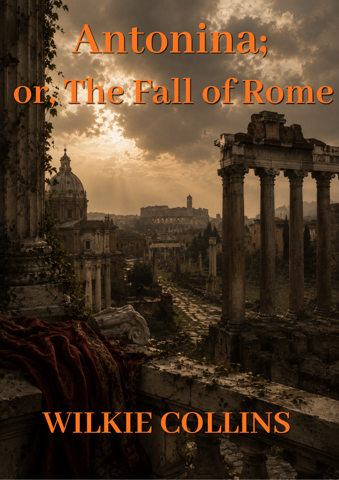
Rome Falls Through the Eyes of a Young Woman
Wilkie Collins's First Novel
A Classical Romance Written Before the Sensation Novels
The Debut Critics Compared with Shakespeare
Before the celebrated masterpieces came Antonina; or, The Fall of Rome: a first book in which Wilkie Collins's defining concerns were already taking shape.
Antonina, or the Fall of Rome is an 1850 historical novel by Wilkie Collins. The novel was completed in 1848 and, after the first two publishers refused to accept it, it was issued by Richard Bentley as a three-volume book early in 1850. It is the only example of Collins writing a classical romance novel; and it was met, as Collins later recalled, "with such a chorus of praise as has never been sung over me since". Bentley advertised it in the March 1850 issue of Athenaeum, quoting a full column of "effusive praise from nine dailies and weeklies" where, for example, The Observer described it as "a remarkable book", and The Morning Post lauded it as "sufficient to place [its author] in the very first rank of English novelists". July issue of Harper's Magazine hailed its "splendour of imagination", while another issue of The Athenaeum and an issue of The Eclectic Review compared Collins to William Shakespeare.
Set during the Gothic siege of Rome in the sixth century, the novel places private loyalties inside the collapse of an empire. Antonina's vulnerability, religious conflict, political violence, and the spectacle of a city under threat let Collins combine historical research with the pace and emotional pressure of romance.
The book is especially striking beside the mystery and sensation novels for which Collins later became famous. Devices that would remain central to his fiction are already visible: endangered identity, concealed motives, rapidly changing fortunes, and institutions that fail to protect the innocent.
“. July issue of Harper's Magazine hailed its ”
Why Antonina; or, The Fall of Rome Still Matters
Read today, Antonina; or, The Fall of Rome offers more than the curiosity of a famous writer's beginning. It preserves the risks, experiments, and unresolved tensions of a literary voice before later success made that voice familiar.
Return to the beginning, and discover how Antonina; or, The Fall of Rome first opened the path ahead.
Miva: the next reading experience beyond audiobooks
Listen like an audiobook, then ask anything, anytime.
Start Miva's narrationMiva does not just narrate. It keeps explaining based on what you ask.