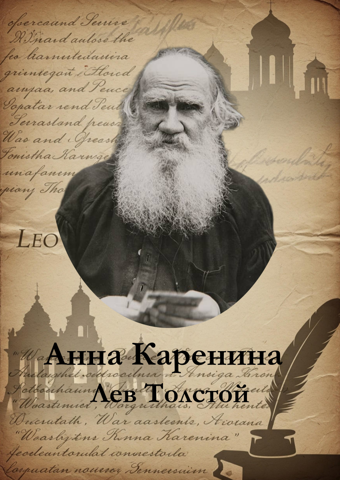
One of the classic examples of the Russian novel, Anna Karenina has achieved world fame and recognition. Emerging "at the turning point of Russian history," Leo Tolstoy's novel possesses immense social, philosophical, and moral content. The artistic structure of Anna Karenina represents a unique experiment in constructing a "novel of contemporary life" as a "novel of broad scope." As the author of this work, E. G. Babaev, asserts, "the significance of Tolstoy's novel lies not in the aesthetic value of individual scenes, but in the artistic completeness of the whole."
Based on the provided Knowledge Map, the selected text is Tolstoy's primary novel *Anna Karenina* itself. The Knowledge Map does not contain a scholarly monograph of literary criticism about the novel, but rather the narrative text of Tolstoy's original work. The narrative unfolds against the backdrop of 19th-century Russian high society, exploring contrasting trajectories of love, marriage, and personal morality through two main plotlines: the tragic affair of Anna Karenina and the spiritual quest of Konstantin Levin. The story begins in Moscow with domestic turmoil in the Oblonsky household, where Prince Stepan Arkadyevich (Stiva) has been unfaithful to his wife, Darya Alexandrovna (Dolly). Stiva’s sister, Anna Karenina, arrives from St. Petersburg to mediate the reconciliation. During her visit, Anna meets Count Alexei Vronsky, a charming cavalry officer who is currently courting Dolly’s younger sister, Ekaterina Shcherbatskaya (Kitty). Vronsky becomes instantly enamored with Anna, abandoning his pursuit of Kitty. Heartbroken and ill, Kitty rejects a proposal from Konstantin Levin, a socially awkward landowner devoted to agricultural reform. Anna returns to St. Petersburg, but Vronsky follows her. Despite being married to Alexei Alexandrovich Karenin,a high-ranking, emotionally detached government official,and having an eight-year-old son, Seryozha, Anna surrenders to her feelings for Vronsky. Their passion leads to a public affair that scandalizes Petersburg society. Karenin initially insists on maintaining appearances to avoid public shame, but Anna eventually confesses her infidelity after Vronsky falls during a high-stakes steeplechase race. Anna becomes pregnant with Vronsky’s child. During a near-fatal childbirth, Anna begs for Karenin’s forgiveness. Moved by the moment, Karenin forgives both Anna and Vronsky, displaying unexpected magnanimity. Shamed by Karenin’s nobility, Vronsky attempts suicide but survives. Once recovered, Anna decides to leave Karenin and her son behind, travelling to Italy with Vronsky and their newborn daughter. Parallel to Anna’s downfall, Levin continues his rural life, reflecting on social equity, labor, and faith. Kitty recovers from her heartbreak, and after meeting Levin again, she accepts his second proposal. Their marriage, while tested by domestic adjustment and the death of Levin’s brother Nikolai, becomes a source of moral growth and spiritual grounding. Upon returning to Russia, Anna finds herself ostracized by elite society, which hypocritically condemns her public breach of convention while tolerating discrete infidelities. Vronsky retains his freedom and social standing, causing Anna to grow increasingly paranoid, jealous, and isolated in their country estate. Her emotional stability deteriorates as she becomes convinced that Vronsky no longer loves her and intends to marry a younger woman of his mother's choosing. Driven to despair during a journey to the railway station in Nizhniy Novgorod, Anna reflects bitterly on human selfishness and the hopelessness of her position. Believing her death is the only way to punish Vronsky and regain his remorse, she throws herself under the wheels of a passing freight train. Following Anna’s death, a devastated Vronsky joins a volunteer squadron to fight in the Serbo-Turkish War, seeking an end to his own life on the battlefield. Meanwhile, Levin experiences a profound spiritual awakening through a conversation with a peasant, realizing that the purpose of life lies not in rational self-interest, but in living for goodness, love, and God.
All happy families are alike; each unhappy family is unhappy in its own way.Original: Все счастливые семьи похожи друг на друга, каждая несчастливая семья несчастлива по-своему.Anna Karenina Part 1, Chapter I. This iconic opening line sets the thematic foundation of the entire novel, establishing Tolstoy's profound exploration of domestic life, marriage, and human vulnerability.
The husband, the deceived husband, who had until now seemed a pitiful creature, an accidental and somewhat comical obstacle to his happiness, was suddenly summoned by her very self and raised to an awe-inspiring height; and on this height the husband appeared not evil, not false, not ludicrous, but kind, simple, and majestic.Original: Муж, обманутый муж, представлявшийся до сих пор жалким существом, случайною и несколько комическою помехой его счастью, вдруг ею же самой был вызван, вознесен на внушающую подобострастие высоту, и этот муж явился на этой высоте не злым, не фальшивым, не смешным, но добрым, простым и величественным.Anna Karenina Part 4, Chapter XVII. This passage marks a major psychological turning point where social stereotypes crumble, forcing Vronsky into a painful confrontation with his own moral inferiority.
He knew very well the manner of dilettantes (the cleverer they were, the worse) of inspecting the studios of contemporary artists for the sole purpose of having the right to say that art had fallen, and that the more one looks at the new, the more one sees how inimitable the great ancient masters remained.Original: Он знал очень хорошо манеру дилетантов (чем умнее они были, тем хуже) осматривать студии современных художников только с той целью, чтоб иметь право сказать, что искусство пало и что чем больше смотришь на новых, тем более видишь, как неподражаемы остались великие древние мастера.Anna Karenina Part 5, Chapter IX. It offers a penetrating critique of aristocratic art connoisseurship versus authentic artistic creation, revealing Mikhailov's fierce pride and cynical skepticism.
What was he seeking in me? Love not so much as the satisfaction of vanity.Original: Чего он искал во мне? Любви не столько, сколько удовлетворения тщеславия.Anna Karenina Part 7, Chapter XXVII. This interior monologue captures Anna's devastating emotional unraveling and her tragic realization that her romantic ideal has dissolved into mutual resentment.
The famous doctor, still a young and very handsome man, demanded an examination of the patient. He seemed to take special pleasure in insisting that a young girl's modesty was merely a remnant of barbarism, and that nothing could be more natural than for a still-young man to feel a young naked girlOriginal: Знаменитый доктор, не старый еще, весьма красивый мужчина, потребовал осмотра больной. Он с особенным удовольствием, казалось, настаивал на том, что девичья стыдливость есть только остаток варварства и что нет ничего естественнее, как то, чтоб еще не старый мужчина ощупывал молодую обнаженную девушку.Anna Karenina Part 1, Chapter XXI. It sharply satirizes the cold clinical detachment of modern medicine while capturing Kitty's acute vulnerability during her emotional and physical breakdown.
Babaev's scholarly work presents a rigorous, academic analysis that requires focused attention, particularly for readers unfamiliar with literary criticism. The text engages deeply with structural analysis, historical context, and philosophical themes rather than simple plot narration. However, its clear focus on Tolstoy's artistic design makes it an accessible guide for students and literary enthusiasts seeking a deeper understanding of narrative theory.
According to E. G. Babaev, the novel's status as a masterpiece stems from its unprecedented artistic completeness rather than mere dramatic storytelling. Tolstoy successfully constructs a novel of modern life that balances individual romantic tragedy with broad philosophical inquiry. The work achieves a unique architectural harmony by placing Anna's moral downfall alongside Levin's spiritual rebirth, reflecting the full complexity of 19th-century Russian society.
The final chapters bring the converging paths of societal expectation, personal morality, and existential questioning to a ultimate resolution. A profound shift in perspective alters the lives of the central figures, leading to a dramatic reckoning at the railway station and a quiet, life-affirming spiritual realization in the Russian countryside.
The monograph was written by E. G. Babaev, a respected literary scholar who specialized in 19th-century Russian literature and the structural analysis of Leo Tolstoy's prose works.
Babaev's central thesis is that the true power of Tolstoy's novel resides in the artistic unity and architectural wholeness of the entire text, rather than in standalone dramatic episodes or individual character studies. QKeywords: What historical context influenced the creation of Tolstoy's novel? A: Babaev emphasizes that the work arose during a critical turning point in Russian history, reflecting the post-emancipation social shifts, rapid industrial development, and shifting moral landscape of mid-19th-century Russia.
Miva: the next reading experience beyond audiobooks
Listen like an audiobook, then ask anything, anytime.
Start Miva's narrationMiva does not just narrate. It keeps explaining based on what you ask.