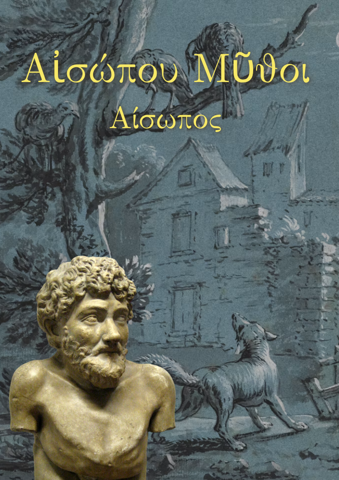
Work Introduction
Background: Aesop's Fables originated from the long-standing fable traditions of Ancient Greece and its successors, rather than being a work completed at a single moment. It conveys worldly wisdom through extremely short stories suitable for oral tradition, school education, and rhetorical training. Animals, farmers, gods, and everyday characters form simple conflicts in the stories, transforming issues such as power, greed, stupidity, wit, and fate into memorable narrative models. This background is not just a chronological note; it also determines how the work understands power, desire, and individual choice. If readers grasp this historical context first, they can see the deeper cultural anxieties and value conflicts behind the plots.
Story Synopsis: The book includes familiar characters such as the fox, the crow, the tortoise and the hare, the lion, and the mouse. Each story typically describes only one action, one misjudgment, or one ironic outcome. Characters often suffer setbacks due to greed, pride, gullibility, or laziness, or escape trouble through wit, patience, or mutual aid. Although the stories are short, they form clear moral prompts at the end, allowing readers to transform the plots into life judgments. While reading, one can view the plots as a series of tests: how characters face misjudgment, temptation, loss, or desire is often more important than the events themselves. The progression of the stories ensures that the classics are no longer distant from modern experience but are brought back into the reader's judgment.
Literary Features: The power of Aesop's Fables lies in its conciseness and versatility. It does not pursue deep psychological descriptions of characters but uses vivid characters and single events to achieve moral compression. Animal personification allows criticism to avoid direct real-world references while more sharply articulating power relations in human society. Many stories have ironic endings, reminding readers that morality is not just dogma, but the identification of costs and consequences in specific situations. Its beauty lies not only in plot or language but in how it transforms thoughts into perceptible scenes and character actions. The reversals, contrasts, symbols, and tonal shifts within the work give it layers that reward re-reading, moving beyond simple genre entertainment.
Work Encyclopedia
Author's Life: Whether Aesop was a definitive historical figure remains a matter of debate. Legend describes him as an Ancient Greek slave, storyteller, and wise man, and posterity attributed a vast number of fables to his name. Thus, "Aesop" is more like a central symbol of a tradition than a single author in the modern sense. This ambiguity actually illustrates the collective nature of the fables: the works come from long-term oral transmission, adaptation, and educational use. Understanding the author's life helps identify recurring themes in the work: power, faith, identity, displacement, frustration, or the obsession with beauty. These life experiences are not the sole explanation for the work, but they provide a solid entry point for reading.
Relationship Between Author and Work: The relationship between Aesop's Fables and its author differs from that of modern novels. It is not a complete system of the author's self-expression, but a library of wisdom gathered under Aesop's name. Each fable can be reinterpreted by different eras, capable of educating children while satirizing politics and human nature. The image of Aesop has remained effective for so long because he represents the ability of the weak to tell the truth through stories. Therefore, while reading this book, one can observe how the author's intellectual concerns are transformed into characters, plots, and narrative rhythms. The work does not simply state the author's position; it allows these positions to be tested within the stories, which is why the classics can engage in cross-generational dialogue.
Classic Reflection: In the last decade, this can be read alongside the animated film The Bad Guys (2022). The film similarly uses animal characters and moral labels to discuss whether a character is necessarily limited by nature or social impression. In comparison, Aesop's Fables is colder and briefer, often providing lessons directly through outcomes; contemporary animation extends the fable into a long-form narrative of character growth, friendship, and anti-stereotyping. Such a comparative reading is not about replacing the original with a screen adaptation, but seeing how the same set of questions is reorganized in different media. Films often amplify visuals, rhythm, and contemporary issues, while the original work retains finer linguistic layers and ideological logic."
Miva: the next reading experience beyond audiobooks
Listen like an audiobook, then ask anything, anytime.
Start Miva's narrationMiva does not just narrate. It keeps explaining based on what you ask.